Bid, Ask, Spread and Liquidity
Bid, Ask, Spread & Liquidity
Introduction
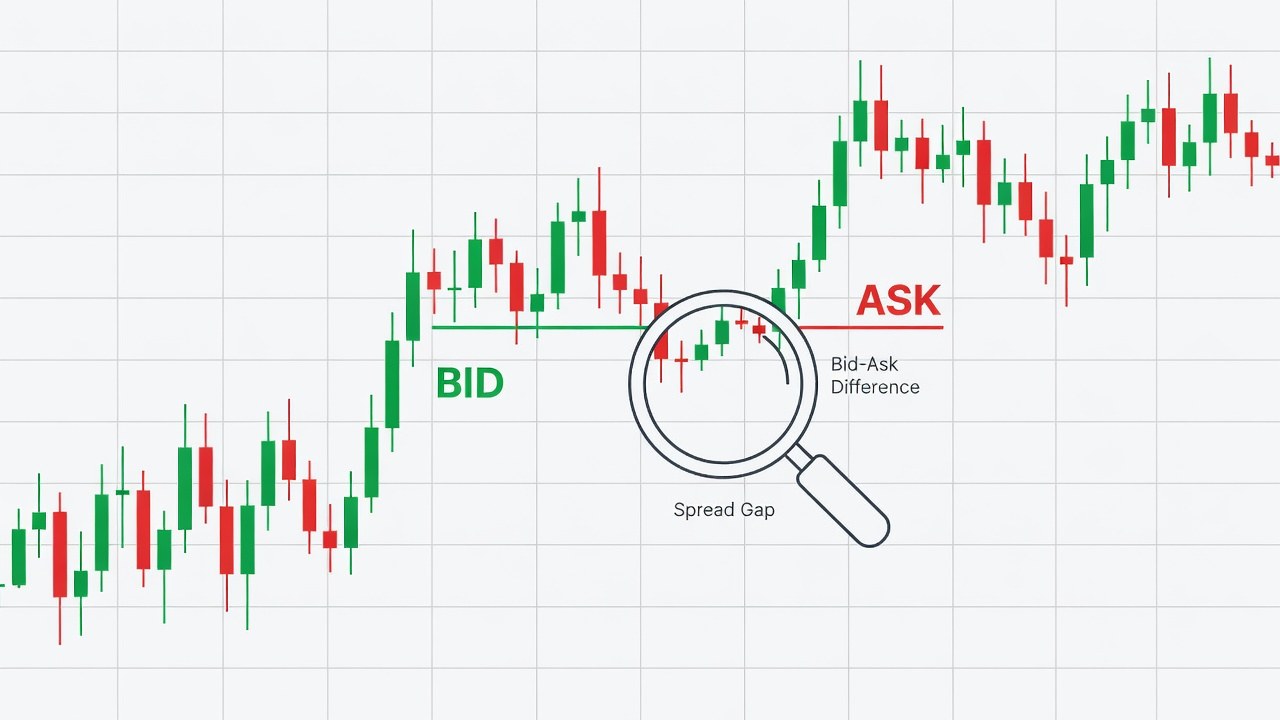
Every stock has two prices at any moment: the bid and the ask. The difference between them is the spread, and together they reveal a lot about liquidity. This lesson explains these core concepts.
The Bid
The bid is the highest price a buyer is currently willing to pay. If you want to sell immediately, you sell at the bid.
The Ask
The ask is the lowest price a seller is currently willing to accept. If you want to buy immediately, you buy at the ask.
The Spread
The spread is the difference between ask and bid. It is effectively a cost of trading — you buy at the ask and sell at the bid, so the spread is the gap you cross.
Bid $99.90 | Ask $100.00 -> spread = $0.10
Liquidity
Liquidity is how easily you can buy or sell without moving the price much. Highly liquid stocks trade in huge volumes and have tight spreads. Illiquid ones trade rarely and have wide spreads.
High liquidity  -> many buyers/sellers -> narrow spread
Low liquidity   -> few participants    -> wide spread
Why Spreads Matter
Every round-trip trade costs you the spread. Low-fee brokers still leave you paying the spread through prices, so liquid, tight-spread assets are cheaper to trade — an important practical detail.
Real-World Example
A mega-cap stock like a large bank might show bid $99.90 / ask $100.00 — a tight $0.10 spread because it is heavily traded. A tiny, rarely-traded company might show bid $5.00 / ask $5.80 — a wide $0.80 spread reflecting poor liquidity.
Summary
- Bid = highest price a buyer will pay
- Ask = lowest price a seller will accept
- Spread = ask minus bid; a cost of trading
- Liquidity = ease of trading without moving price
- Liquid markets have narrow spreads; illiquid ones have wide spreads
Next Lesson
Let's decode the numbers on a stock quote.
Quiz - Quiz - Bid, Ask, Spread & Liquidity
1. The 'bid' is the price at which...
2. The 'ask' is the price at which...
3. The difference between bid and ask is the...
4. A narrow spread usually means...