Order Types
Order Types
Introduction
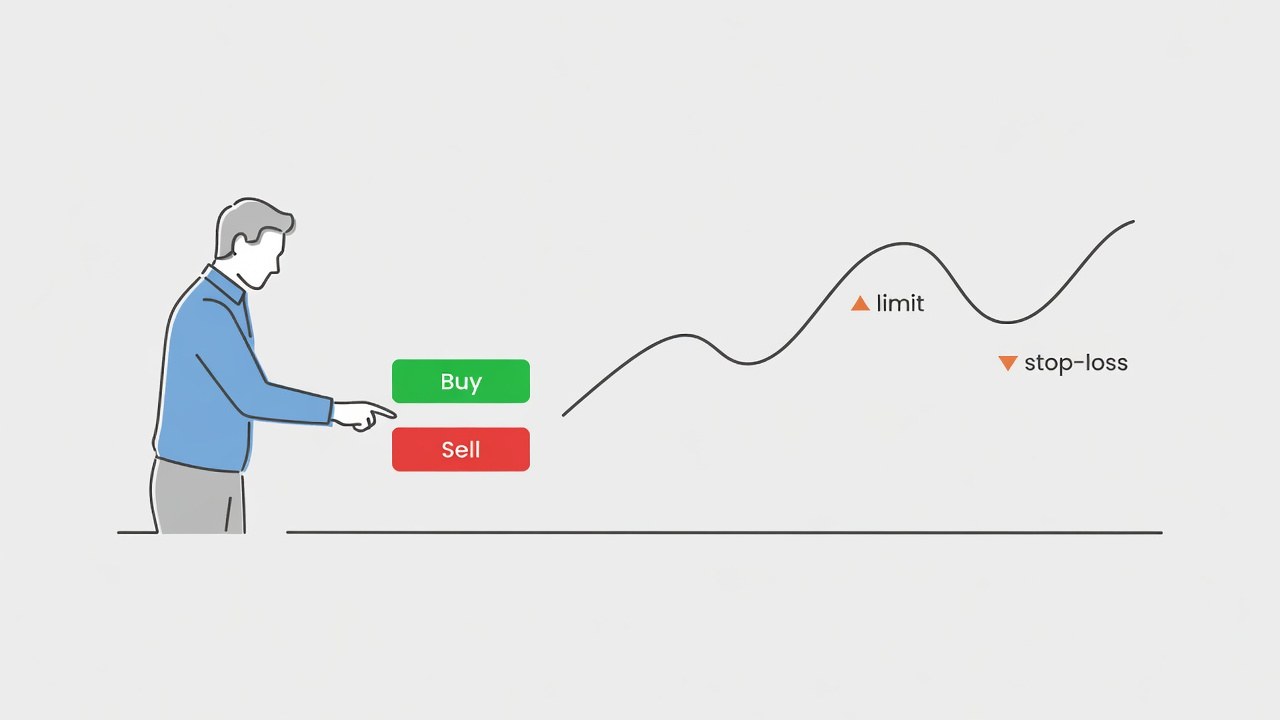
When you trade, you place an order that tells the broker what and how to buy or sell. Choosing the right order type balances price certainty against the speed of execution. This lesson covers the most common types.
Market Order
A market order buys or sells immediately at the current best available price. It guarantees execution but not the exact price.
Best for: speed — when you want in or out now.
Limit Order
A limit order only executes at your specified price or better. Buy limits execute at or below your price; sell limits at or above it.
Best for: price control — you won't pay more (or receive less) than you choose.
Market order: fill now, price uncertain
Limit order:  price set, fill may not happen
Stop-Loss Order
A stop-loss is a conditional order that becomes a market order once the price hits a certain level. It is used to cap losses automatically.
You buy at $100, set stop at $90
If price falls to $90 -> order triggers and sells
Stop-Limit Order
A stop-limit triggers a limit order when a stop price is hit. It gives control over both trigger and fill price, but risks not filling if the market gaps.
Which to Use When
- Day-to-day, easy trades: market orders
- Strict pricing: limit orders
- Protecting a position: stop-loss
- Careful exits: stop-limit
Summary
- Market order: immediate fill, uncertain price
- Limit order: your price or better, fill not guaranteed
- Stop-loss: caps losses by selling at a set trigger
- Stop-limit: combines trigger level with a fill limit
- Choose the order type to match your priority: speed or price
Next Lesson
Understand bid and ask — the two prices behind every quote.
Quiz - Quiz - Order Types
1. What does a market order do?
2. A limit order is executed only...
3. A stop-loss order is designed to...
4. Which order gives you price certainty but not immediate fill?