The Balance Sheet and Cash Flow
The Balance Sheet & Cash Flow
Introduction
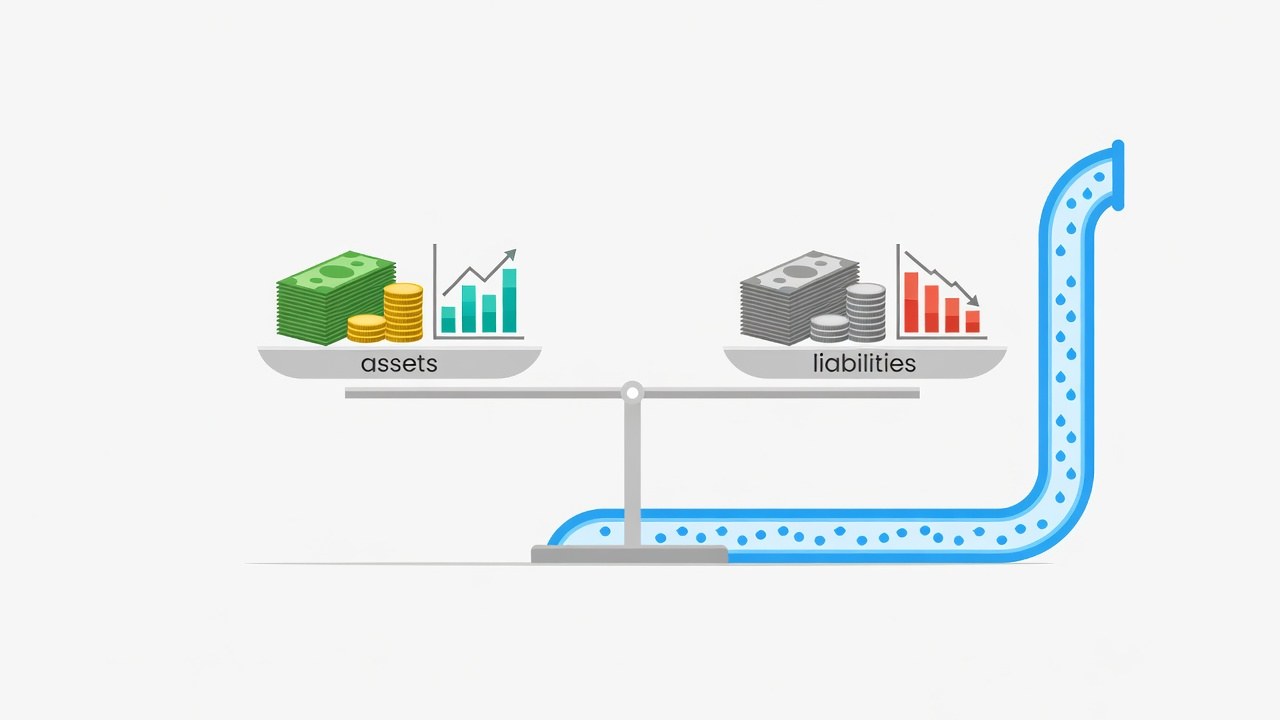
The balance sheet shows what a company owns and owes at a moment in time, while the cash flow statement shows real cash movement. This lesson explains both and why liquidity matters.
The Balance Sheet
The fundamental identity:
Assets = Liabilities + Equity
- Assets — cash, inventory, property, receivables
- Liabilities — debt, payables, obligations
- Equity — what belongs to shareholders
Reading Solvency
Compare debt to assets and equity:
- High debt = more financial risk and interest cost
- Strong equity = a cushion against downturns
- The balance sheet reveals whether a company can survive hard periods
The Cash Flow Statement
Cash flow is split into three:
1. Operating — cash from core business (most important for quality) 2. Investing — cash spent/bought on long-term assets 3. Financing — cash from debt, issuing shares, dividends
Profit vs Cash
A key insight: profit is not cash.
Revenue recognized (profit) vs cash actually received
Expenses recognized vs cash actually paid
A company can show a profit yet be short on cash due to unpaid invoices, inventory build-up, or capital spending.
Why This Matters
- Operating cash flow confirms earnings are real
- A healthy balance sheet means the company can weather downturns and fund growth
- Comparing net income to operating cash flow reveals earnings quality
Real-World Example
Company A reports $10M profit but only $2M operating cash flow — invoices unpaid, inventory piling up. Company B reports $10M profit with $11M operating cash flow. Company B's earnings are far higher quality.
Summary
- Balance sheet: Assets = Liabilities + Equity
- It reveals solvency and financial risk
- Cash flow has operating, investing, and financing parts
- Profit ≠ cash; operating cash flow confirms earnings quality
- A strong balance sheet and real cash flow mean a resilient business
Next Lesson
Now the ratios that judge profitability.
Quiz - Quiz - Balance Sheet & Cash Flow
1. The accounting identity is...
2. Assets are...
3. Operating cash flow shows...
4. A company can report profit but still run out of cash because...