Macro, Interest Rates and Cycles
Macro, Interest Rates & Cycles
Introduction
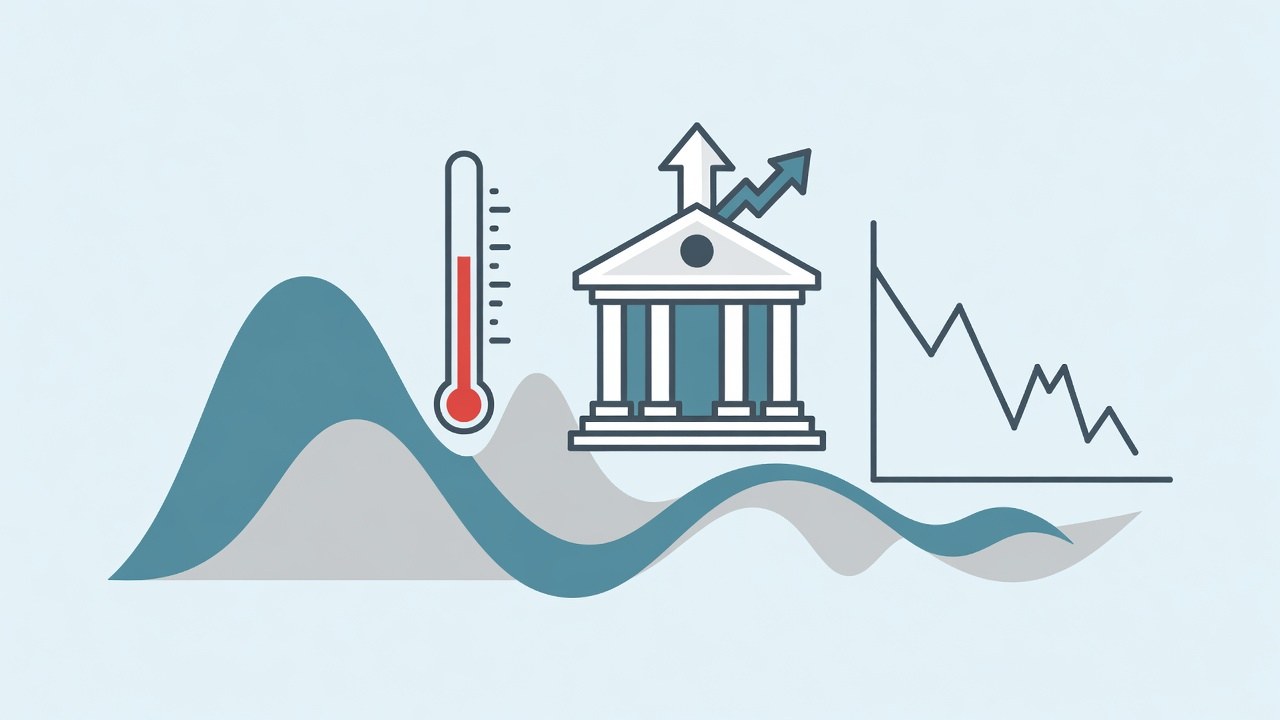
No company operates in a vacuum. Macro conditions — interest rates, inflation, and the economic cycle — powerfully affect valuations and earnings. This lesson explains the key links.
Interest Rates and Valuation
Rising interest rates tend to pressure stocks, especially:
- High-valuation growth stocks (future earnings are discounted more heavily)
- Companies with heavy debt (higher borrowing costs)
- Long-duration assets in general
Inflation
Inflation hurts companies that can't pass rising costs to customers and erodes purchasing power. It can help firms with pricing power that can raise prices.
- Input costs up → margins pressured
- Pricing power = ability to pass on costs
The Economic Cycle
Businesses respond differently to the cycle:
- Cyclical (autos, construction, commodities) — earnings swing with the economy
- Defensive (utilities, staples, healthcare) — demand stays stable in downturns
Rates and the Cost of Debt
Higher rates raise a company's interest expense and refinancing costs, hitting profitability and cash flow — especially for leveraged firms.
Real-World Example
When the central bank raises rates, a highly-indebted growth stock with only future profit promises falls sharply: its future cash flows are worth less today, and its borrowing costs rise. A utility with stable cash flows and pricing power is less affected.
Summary
- Higher rates pressure growth and leveraged stocks
- Inflation hurts firms without pricing power
- Cyclical vs defensive determines sensitivity to the economy
- Rates raise debt costs for leveraged companies
- Always read a company in its macro context
Next Lesson
Now valuation: DCF, the classic intrinsic-value method.
Quiz - Quiz - Macro, Rates & Cycles
1. Rising interest rates tend to...
2. Economic cycles affect...
3. A cyclical company's earnings...
4. Inflation can hurt companies that...