The Three Financial Statements
The Three Financial Statements
Introduction
Fundamental analysis starts with the numbers a company publishes. The three core financial statements tell the full story: the income statement, the balance sheet, and the cash flow statement. This lesson introduces all three.
The Three Statements
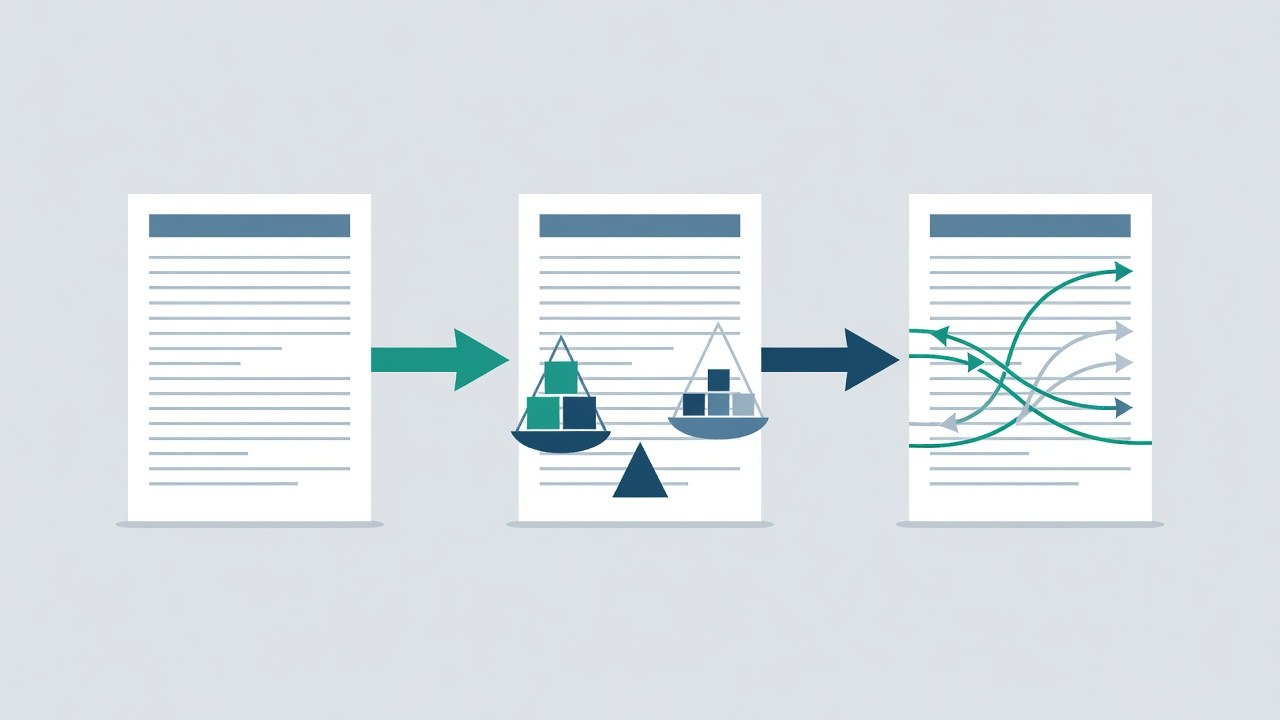
1. Income statement — profitability over a period 2. Balance sheet — assets, liabilities and equity at a point in time 3. Cash flow statement — actual cash moving in and out
Together they answer: how profitable is it, how solid is it, and does it generate real cash?
The Income Statement
Shows revenue, costs, and profit over a period (quarter or year):
Revenue
 - Cost of goods sold      = Gross profit
 - Operating expenses      = Operating profit
 - Interest and tax        = Net income
The Balance Sheet
A snapshot of financial position at one date:
Assets = Liabilities + Equity
- Assets — what the company owns
- Liabilities — what it owes
- Equity — owners' stake (what's left)
The Cash Flow Statement
Shows actual cash movements, split into three parts:
- Operating — cash from core business
- Investing — cash from buying/selling assets
- Financing — cash from debt, equity, dividends
Why You Need All Three
- Profit doesn't always equal cash (timing, non-cash items)
- A profitable company can still run out of cash
- The balance sheet shows whether a company can survive hard times
Summary
- Income statement = profitability
- Balance sheet = financial position (Assets = Liabilities + Equity)
- Cash flow statement = real cash movement
- Profit can differ from cash; all three are needed
- Combine them for a complete financial picture
Next Lesson
Let's read the income statement in detail.
Quiz - Quiz - The Three Financial Statements
1. Which statement shows profitability over a period?
2. Which statement is a snapshot of assets, liabilities and equity at a point in time?
3. The cash flow statement reports...
4. The three statements are...