What is Vibe Coding?
What is Vibe Coding?
Introduction
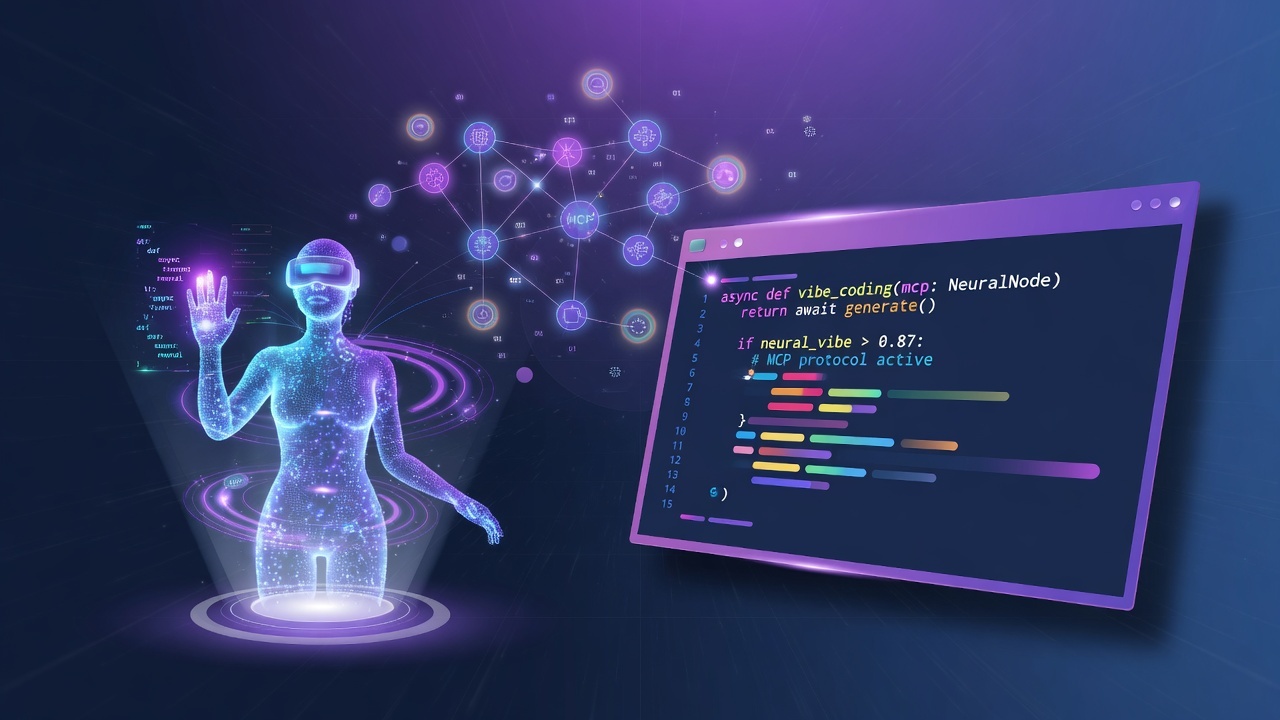
Vibe Coding is a new way of building software where you describe what you want in natural language and let an AI assistant write, iterate, and refine the code with you. Instead of typing every line manually, you "vibe" with the AI as a collaborative partner — you set the direction, review the output, and course-correct in real time.
The term describes a shift from writing code to directing code. You focus on the "what" and the "why," while the AI handles much of the "how." This doesn't make you a passive passenger — it makes you an architect, reviewer, and quality gatekeeper.
Why Vibe Coding Matters
Speed of Iteration
Traditional development moves in long feedback loops: write, build, test, fix. Vibe coding collapses these loops. You can generate a working prototype in minutes and iterate on it dozens of times in a single session.
Lower Barrier to Entry
You don't need to memorize every API or framework detail. The AI handles implementation specifics, which lets you focus on solving the actual problem. This makes complex tooling far more accessible.
The Human Is Still in Charge
The best vibe coders are not passive. They:
- Review every line the AI produces
- Understand the architecture well enough to direct it
- Test, debug, and verify correctness
- Maintain clear intent in their prompts
The Core Loop
A typical vibe coding session follows a repeating cycle:
Describe Intent
      |
      v
AI Generates Code
      |
      v
You Review & Critique
      |
      v
You Request Changes
      |
      v
AI Refines Output
Each pass tightens the result. The quality of your prompts and the rigor of your review determine how good the final code is.
Characteristics of Good Vibe Coding
- High iteration speed — small, frequent adjustments
- Minimal context switching — the AI keeps the relevant state in view
- AI as collaborator — not as an oracle, and never a black box you blindly trust
- Structured intent — clear goals, constraints, and acceptance criteria
Common Pitfalls
- Giving vague, one-sentence prompts and expecting magic
- Blindly accepting generated code without review
- Skipping version control because "the AI wrote it"
- Letting the AI drive decisions you should own
Real-World Example
Imagine you need a script to rename a batch of files. Instead of searching documentation:
1. You describe the transformation: "rename all .txt files in this folder to use lowercase and replace spaces with underscores" 2. The AI writes a small Python or Bash script 3. You review it for edge cases (files with no spaces, duplicates, hidden files) 4. You ask the AI to handle those edge cases 5. The AI refines the script 6. You commit the working version
Summary
Vibe coding is a collaborative, AI-accelerated approach to development. It works best when you:
- Maintain clear intent and structured context
- Actively review and critique generated code
- Use version control and tests as safety nets
- Keep the AI as a partner, not a replacement for judgment
Next Lesson
In the next lesson, we'll explore the Model Context Protocol (MCP) — the standard that lets AI assistants securely connect to the tools and data they need.
Quiz - Quiz - What is Vibe Coding?
1. What is the primary goal of Vibe Coding?
2. Which of the following is NOT a characteristic of Vibe Coding?
3. Vibe Coding works best when the developer...