Enforcement in Practice: Interpol, Red Notices and Legal Regimes
Enforcement in Practice: Interpol, Red Notices and Legal Regimes
Introduction
AML/CFT only works if there's real enforcement behind it. This final lesson looks at how laws are actually enforced — the key legal regimes, who brings cases, and how international tools like Interpol's Red Notices help track offenders across borders.
The Legal Foundations: Foundational Laws
United States
- Bank Secrecy Act (BSA, 1970) — the foundational US AML law creating reporting, record-keeping, and currency-transaction requirements.
- USA PATRIOT Act (2001) — strengthened AML by adding due diligence, beneficial-ownership, and information-sharing duties.
- Anti-Money Laundering Act (2020) — modernized the BSA with new beneficial-ownership reporting requirements and expanded FinCEN's authority.
- Supervision by FinCEN (financial intelligence and BSA reporting) with enforcement by agencies like OFAC (sanctions) and financial regulators.
European Union
- A series of AML Directives: 4AMLD, 5AMLD, 6AMLD — each tightening requirements.
- Moving toward a directly applicable AML Regulation (AMLR) and a centralized EU AML Authority (AMLA).
- Member states have national FIUs that collect STRs and national regulators that enforce.
United Kingdom
- Proceeds of Crime Act 2002 (POCA) — the main UK money-laundering offense legislation.
- Money Laundering Regulations — impose the CDD, monitoring, and reporting duties.
- Sanctions and Anti-Money Laundering Act 2018 (SAML) — the UK's own sanctions legal basis.
- OFSI (Office of Financial Sanctions Implementation) enforces financial sanctions.
Global
- FATF sets standards and evaluates countries (mutual evaluations, grey/black lists).
- UN Security Council mandates sanctions binding on all members.
Who Enforces
   Lawmakers (parliaments) -> enact AML/CFT laws
   Regulators -> supervise and fine institutions
   FIUs (FinCEN, NCA, etc.) -> receive STRs/SARs
   Law enforcement & prosecutors -> investigate and charge
   Courts -> decide cases, impose penalties/confiscation
Enforcement can be administrative (fines, license revocation, remediation) or criminal (prosecution and imprisonment).
International Cooperation and Interpol
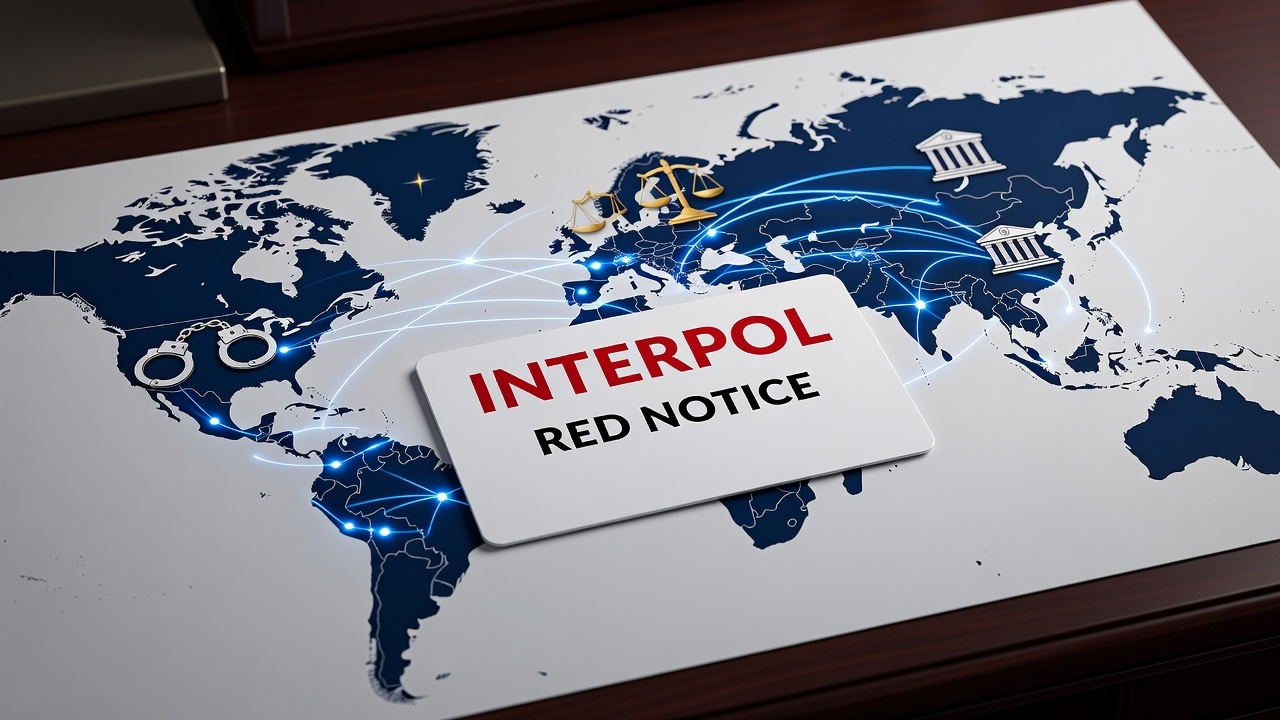
Financial crime is borderless, so enforcement is international. Interpol — the international police organization — facilitates cross-border police cooperation. Its most famous tool is the Red Notice:
- A request to law-enforcement agencies worldwide to locate and provisionally arrest a person pending extradition
- It's not an arrest warrant in itself but a powerful basis for cooperation
- Complements, rather than replaces, national sanctions lists
Examples of Legal Regimes in Action
- US: A bank fails to file required SARs or maintain BSA records → FinCEN/regulators impose heavy fines and a consent order with remediation.
- EU: A crypto firm in an EU state breaches AMLD KYC duties → national regulator fines it and requires remedial action.
- UK: A company deals with a sanctioned entity → OFSI may impose monetary penalties for the sanctions breach.
- International: A corrupt official's assets are traced, frozen domestically, and extradition is sought via a Red Notice.
Sanctions vs Criminal Enforcement vs Confiscation
- Freezing blocks assets of designated persons (administrative)
- Prosecution charges individuals with laundering offenses (criminal)
- Confiscation seizes the proceeds of crime (criminal-justice)
Why It Matters to You
Understanding enforcement helps a compliance officer:
- Know the real stakes (heavy fines, criminal liability, personal accountability)
- Appreciate why accurate records and reports are critical
- Recognize that regulators and investigators act on your reports
- Design programs that survive regulatory scrutiny
Real-World Example
A bank's STR leads investigators to a broader laundering network. Authorities freeze the related accounts, arrest the organizers, and issue a Red Notice for a ringleader who fled abroad. The bank is audited: because its reports and records were timely and accurate, it faces no penalty and its role in the detection is credited.
Summary
- BSA/PATRIOT/AML Act (US), AMLD/AMLR (EU), POCA/MLRs/SAML (UK) are key legal bases
- Regulators, FIUs, law enforcement, and courts enforce
- Interpol and Red Notices support international arrest and extradition
- Freezing, prosecution, and confiscation are distinct but can run together
- Accurate reporting and records are what make enforcement possible
Congratulations!
You've completed the AML/CFT Fundamentals course. You now understand what AML and CFT are, how money laundering works, the role of KYC and due diligence, sanctions and asset freezing, screening, and the daily work of a compliance officer. You're ready to build on this foundation in real compliance roles.
Quiz - Quiz - Enforcement and Legal Regimes
1. What is an Interpol Red Notice?
2. Which US law is a foundational anti-money laundering statute?
3. In the UK, a key money laundering offense is set out in which Act?