Sanctions Screening: Third-Party Firms and How It Works
Sanctions Screening: Third-Party Firms and How It Works
Introduction
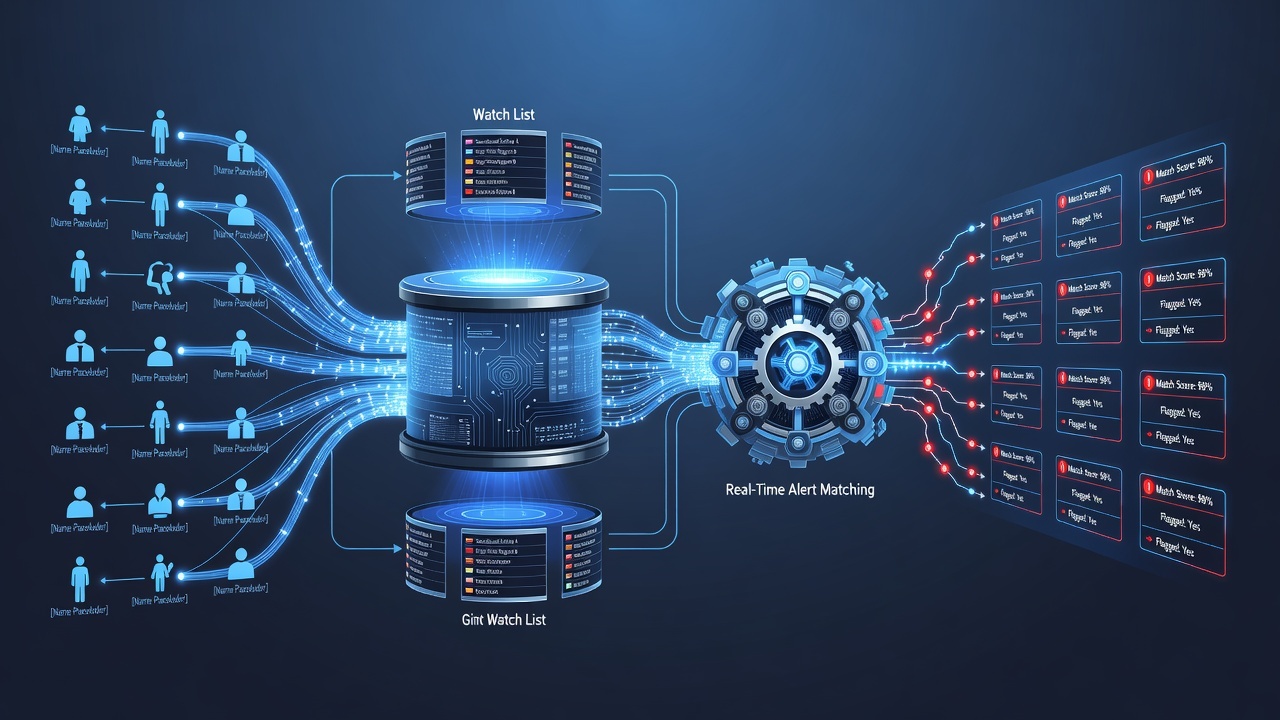
Sanctions lists change constantly and contain thousands of names — in many languages, formats, and spellings. No bank manually matches against all of them. That's why sanctions screening is automated, and why many firms use specialized third-party providers. This lesson explains how screening works and the role of those providers.
What Sanctions Screening Is
Sanctions screening is the process of comparing a customer, counterparty, or transaction party against sanctions and watch lists to identify matches. It's a core, daily compliance obligation, not a one-time event.
Where Screening Happens
Screening is applied at multiple points:
- Onboarding — when a new customer is taken on
- Ongoing — re-screening existing customers periodically and when lists update
- Transactions — screening counterparties and beneficiaries on each payment
- Payments and trade — checking senders/receivers, vessels, and goods
   Onboard  -->  re-screen  -->  screen each transaction
     |              |                 |
     v              v                 v
   compare against sanctions lists, PEP lists, adverse media
The Matching Problem: False Positives and Fuzzy Matching
Names are messy. "Ivan Petrov" exists in thousands of businesses. Screening tools use fuzzy matching and matching algorithms to catch variants (different spellings, aliases, transliterations) — trading off between not missing a true match and not flooding teams with false positives.
- True positive (true match): the person really is on the list → freeze and report
- False positive: the name merely resembles a listed name → review and clear
Why Firms Use Third-Party Screening Providers
Maintaining global sanctions, PEP, and adverse-media data in-house is impractical. Specialized third-party firms provide:
- Aggregated, constantly updated lists spanning OFAC, EU, UN, UK, and national regimes
- Advanced matching algorithms (fuzzy logic, transliteration, soundex-style matching)
- PEP and adverse-media databases beyond pure sanctions
- Watch-list management and automatic updates as lists change
- Ongoing monitoring of existing customers against new designations
How an Alert Is Handled
   Screening tool returns a hit
        |
        v
   Analyst reviews the details
        |
        +-- True match  -->  freeze assets + report to authority
        |
        +-- False positive -->  document reason + clear (with review)
        |
        +-- Possible match -->  escalate for investigation / EDD
The Compliance Officer's Role
The screening tool does the comparison; the human makes the judgment. The compliance officer:
- Reviews hits and decides true match vs false positive
- Documents every decision (audit trail)
- Escalates genuine matches for freezing and reporting
- Configures/oversees the screening rules and lists
- Ensures re-screening when lists update
Real-World Example
A payment screening tool flags a beneficiary whose name closely matches an OFAC SDN entry, but with a different date of birth and country. The analyst reviews the full data, concludes it's a false positive (a different person with a common name), and records the reasoning with approval. Meanwhile a different alert is confirmed as a genuine sanctions match, and the account is frozen and reported.
Summary
- Screening compares customers/counterparties against sanctions, PEP, and watch lists
- It happens at onboarding, ongoing, and per-transaction
- Fuzzy matching causes false positives that humans must review and document
- Third-party providers aggregate and update global lists and handle matching
- True matches are frozen and reported; false positives are cleared with a documented rationale
Next Lesson
Time to meet the person doing all this work — the compliance officer and their daily duties.
Quiz - Quiz - Sanctions Screening
1. What does sanctions screening involve?
2. Why do many firms use specialized third-party screening providers?
3. When a screening tool returns a 'hit', the compliance officer should...