Who Publishes Sanctions: OFAC, BIS, EU, UN, UK and Domestic Regimes
Who Publishes Sanctions: OFAC, BIS, EU, UN, UK and Domestic Regimes
Introduction
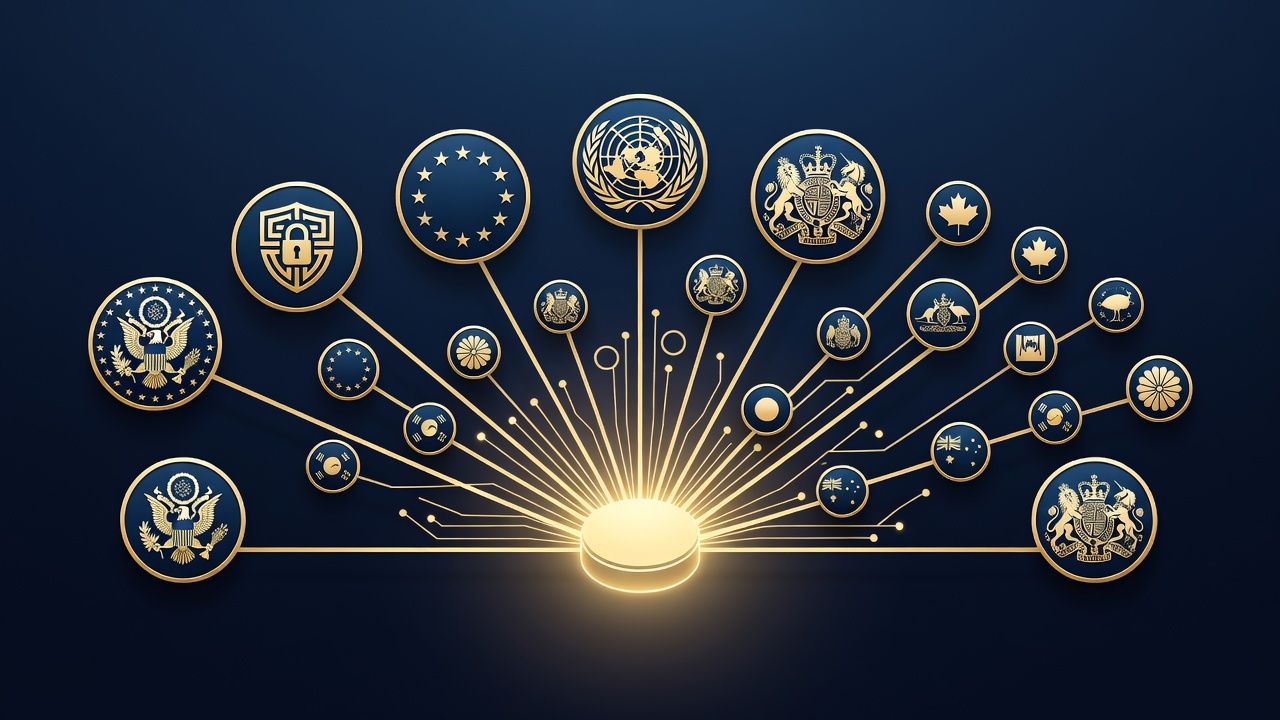
Sanctions come from many authorities at different levels — global, regional, and national. This lesson maps who publishes sanctions and their key lists, so you know which sources your screening covers and where each obligation comes from.
The Global Level: United Nations
The UN Security Council imposes sanctions binding on all member states to maintain international peace and security. Its measures (travel bans, asset freezes, arms embargoes) target specific individuals, entities, and countries.
The UN maintains a Consolidated List of designated persons and entities. UN obligations are legally binding on all UN members, and most national regimes then implement them into domestic law.
The European Union
The Council of the European Union adopts sanctions (restrictive measures) common to all EU member states. The EU implements UN measures and adds its own autonomous regimes.
The EU publishes a Consolidated List of persons, groups and entities subject to EU financial sanctions, along with an EU "Fonctions" list and export-control lists. EU sanctions are directly binding and enforced by each member state.
The United States: OFAC and BIS
Two US agencies dominate US sanctions.
OFAC — Office of Foreign Assets Control
Part of the US Treasury, OFAC administers most US economic and trade sanctions. Its central list is the Specially Designated Nationals (SDN) List. It also publishes the Consolidated (non-SDN) Sanctions List covering other lists, and maintains country/sector-specific programs.
BIS — Bureau of Industry and Security
Part of the US Department of Commerce, BIS administers export controls, including the Entity List and the Commerce Control List for dual-use goods and technology.
US sanctions are notable for their broad extraterritorial reach — they can apply to US persons anywhere and, in many cases, to non-US persons dealing with US-dollar or US-origin transactions.
The United Kingdom
After Brexit, the UK runs its own sanctions regime under the Sanctions and Anti-Money Laundering Act 2018 (SAML).
The Office of Financial Sanctions Implementation (OFSI) — part of HM Treasury — maintains the UK Sanctions List and enforces financial sanctions. The UK consolidates both its own designations and UN measures.
Domestic and National Regimes
Beyond the big global players, many individual countries maintain their own national sanctions lists and regimes, often going further than international obligations. Examples include Canada, Australia, Switzerland, Japan, Singapore, and others. As a compliance professional you must know which jurisdictions' lists apply to your specific business.
Specialized Tools: Interpol and Notices
Interpol is not a sanctions authority, but its Notices (such as Red Notices) inform international law enforcement about wanted persons and support extradition — complementing, rather than replacing, the financial sanctions lists.
The Consolidated Picture
   UN Security Council   (global, binding on all members)
        |
   Regional: EU Council  (binding on member states)
        |
   National: OFAC, BIS (US) | OFSI, SAML (UK) | others
        |
   Obliged entities screen against the lists that apply to them
Not every list applies to every institution — the applicable regimes depend on the institution's location, the currency, counterparties, and where it operates.
Screening Against Multiple Lists
Screening systems typically combine:
- OFAC SDN + Consolidated lists
- EU Consolidated and sectoral lists
- UK (OFSI) sanctions list
- UN Consolidated list
- Relevant national lists
- Plus PEP and adverse-media databases (which are not sanctions but risk flags)
Real-World Example
An EU-based bank onboarding an international client screens against the OFAC SDN, EU, UK, and UN lists. The client's name partially matches a UN-listed entity. The team verifies the details; it's a different person (false positive), cleared with notes. Had it been a true match, the bank would freeze and report.
Summary
- UN Security Council: global sanctions binding on all members
- EU Council: regional sanctions binding on member states
- OFAC (SDN + Consolidated) and BIS (Entity List): the main US authorities
- UK: OFSI under SAML maintains the UK sanctions list
- Many national regimes add their own lists
- Screen against all lists that apply to your business, plus PEP/adverse-media
Next Lesson
How does screening actually work — and why do firms use specialized third-party providers?
Quiz - Quiz - Who Publishes Sanctions?
1. Which US agency administers most economic and trade sanctions?
2. Which US agency controls exports of dual-use goods and technologies?
3. Which bodies issue sanctions at the global and European level?