Reading Key Financial Metrics
Reading Key Financial Metrics
Introduction
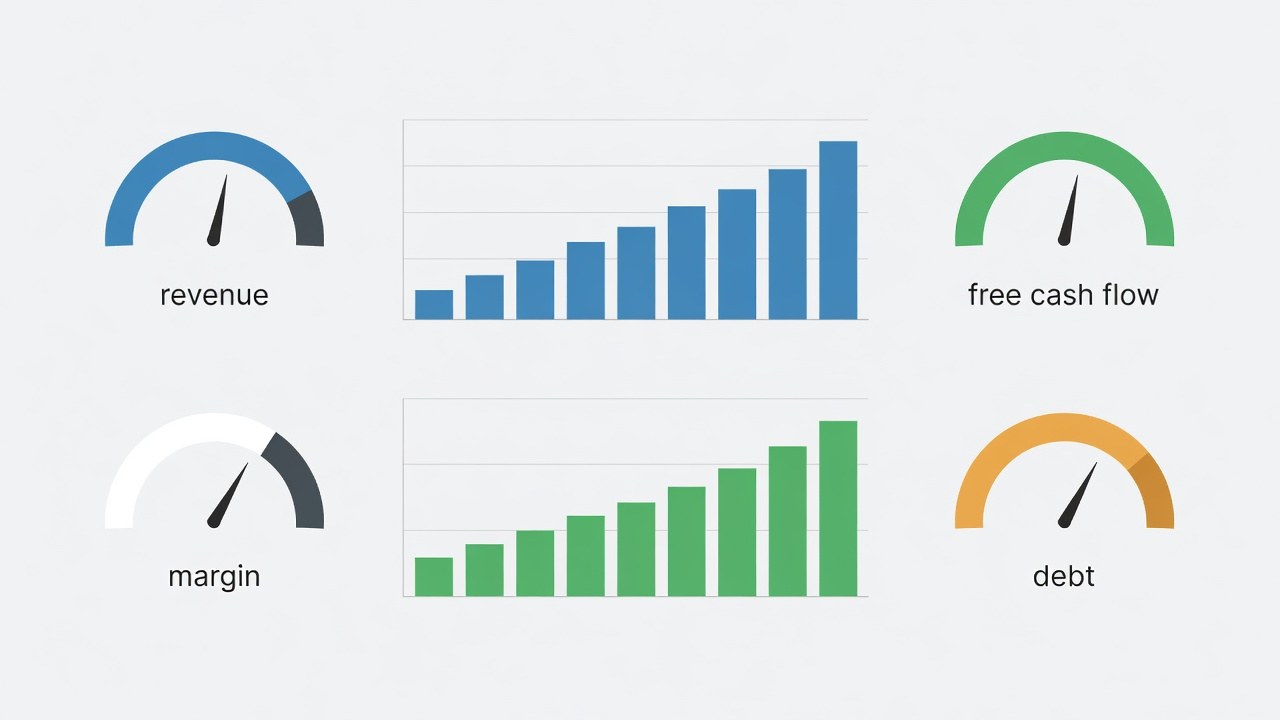
Numbers are the language of company analysis. This lesson covers the key financial metrics to read — growth, profitability, cash flow, and financial health.
Revenue and Growth
Revenue is the top line — what the company sells. Look at:
- Growth rate over several years
- Which segments drive it and whether growth is durable
Profitability and Margins
Margins show how much of each sale becomes profit:
- Gross margin — after direct costs
- Operating margin — after operating costs
- Net margin — after everything
Cash Flow
Free cash flow (FCF) = cash generated after capital spending. It matters more than reported profit alone:
- Positive, growing FCF funds growth, dividends and buybacks
- Profit without cash flow can be a warning sign
Financial Health
To gauge risk:
- Debt/equity — how leveraged the company is
- Interest coverage — can it easily pay its interest?
- Current ratio — can it cover short-term obligations?
Returns on Capital
- ROE / ROA / ROIC — how efficiently it turns capital into profit
- Enterprises that earn high returns and reinvest at those returns compound well
Compare, Don't Just Read
A single number means little. Compare metrics over time and against peers.
Summary
- Revenue shows top-line growth
- Margins show profitability per sale
- Free cash flow shows real cash generation
- Debt/leverage and coverage show financial health
- ROE/ROIC show capital efficiency
- Compare trends and peers, not single numbers
Next Lesson
Beyond the numbers: qualitative factors and industry.
Quiz - Quiz - Reading Key Financial Metrics
1. Revenue shows...
2. Free cash flow (FCF) is...
3. Margins show...
4. Debt/equity and interest coverage assess...