Scenario Analysis and Sensitivities
Scenario Analysis & Sensitivities
Introduction
Valuation depends on assumptions. Scenario and sensitivity analysis stress-tests those assumptions so you understand the range of outcomes — and whether a stock still makes sense if you're wrong.
Scenarios
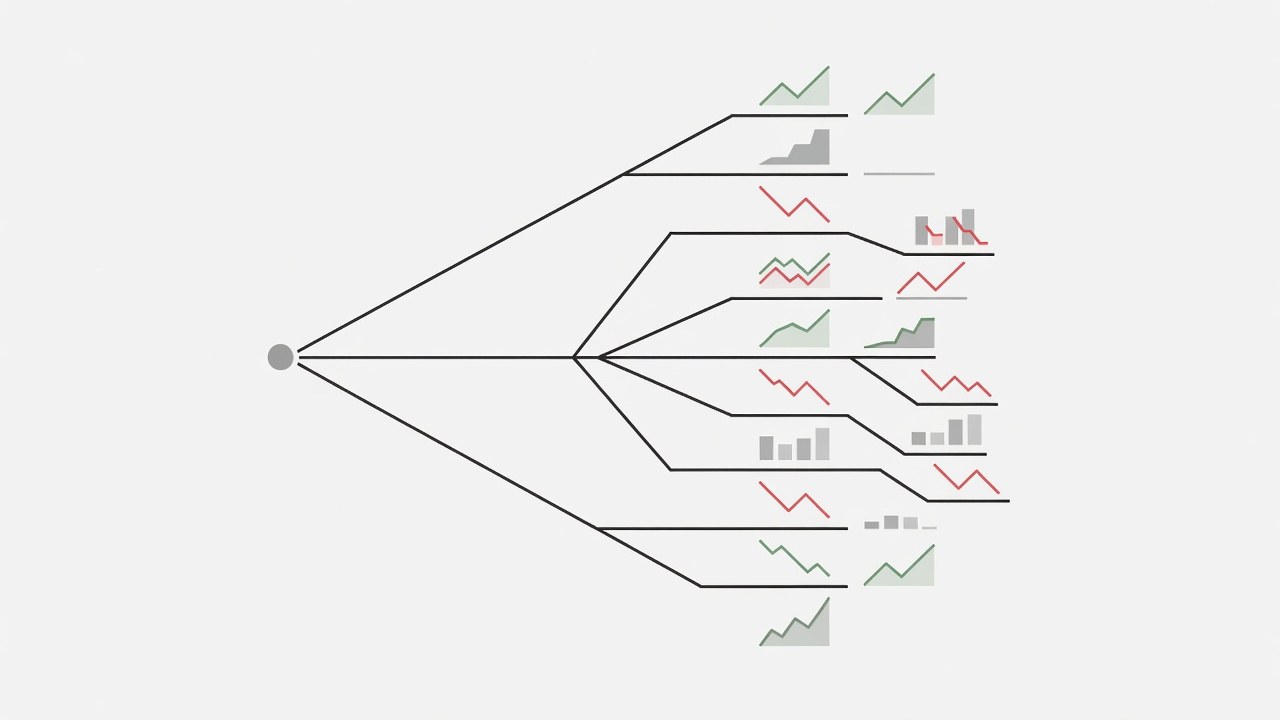
Build a few futures:
- Base case — your most likely path
- Bull case — if growth surprises to the upside
- Bear case — if assumptions disappoint
Sensitivity Tables
Change one assumption at a time to see its impact:
            | growth 5% | growth 8% | growth 11%
margin 12%  |  value A  |  value B  |  value C
margin 15%  |  value D  |  value E  |  value F
This shows how sensitive the valuation is to each input.
Downside First
Ask the most important question:what happens to my downside if the bear case hits?
If the bear case still leaves a reasonable valuation or acceptable loss, the risk is manageable. If the bear case means disaster, size accordingly.
Asymmetric Opportunities
The best setups are asymmetric:
- Limited downside (protected by value and margin of safety)
- Meaningful upside (if the bull case happens)
Using It in a Decision
- Prefer stocks that make sense in the base and can absorb the bear case
- Avoid stocks that only 'work' if everything goes perfectly
- Let scenarios set your position size and stop plan
Summary
- Scenarios: base, bull and bear cases
- Sensitivity tables show which assumptions matter most
- Check your downside if the bear case happens
- Favor asymmetric, limited-downside setups
- Scenarios drive position sizing and stops
Next Lesson
The discipline of buying cheap: margin of safety.
Quiz - Quiz - Scenario Analysis & Sensitivities
1. Scenario analysis tests...
2. A 'bear case' is...
3. Sensitivity tables show...
4. Scenario thinking helps you...