Diodes and LEDs
Diodes and LEDs
What is a Diode?
A diode allows current to flow in only one direction. It has two terminals:
- Anode (+): Positive side
- Cathode (-): Negative side (marked with a stripe)
Diode Symbol
---|>|--- (Anode → Cathode)
The triangle shows current flow direction.
Real Diodes and LEDs
Here's what LEDs look like:
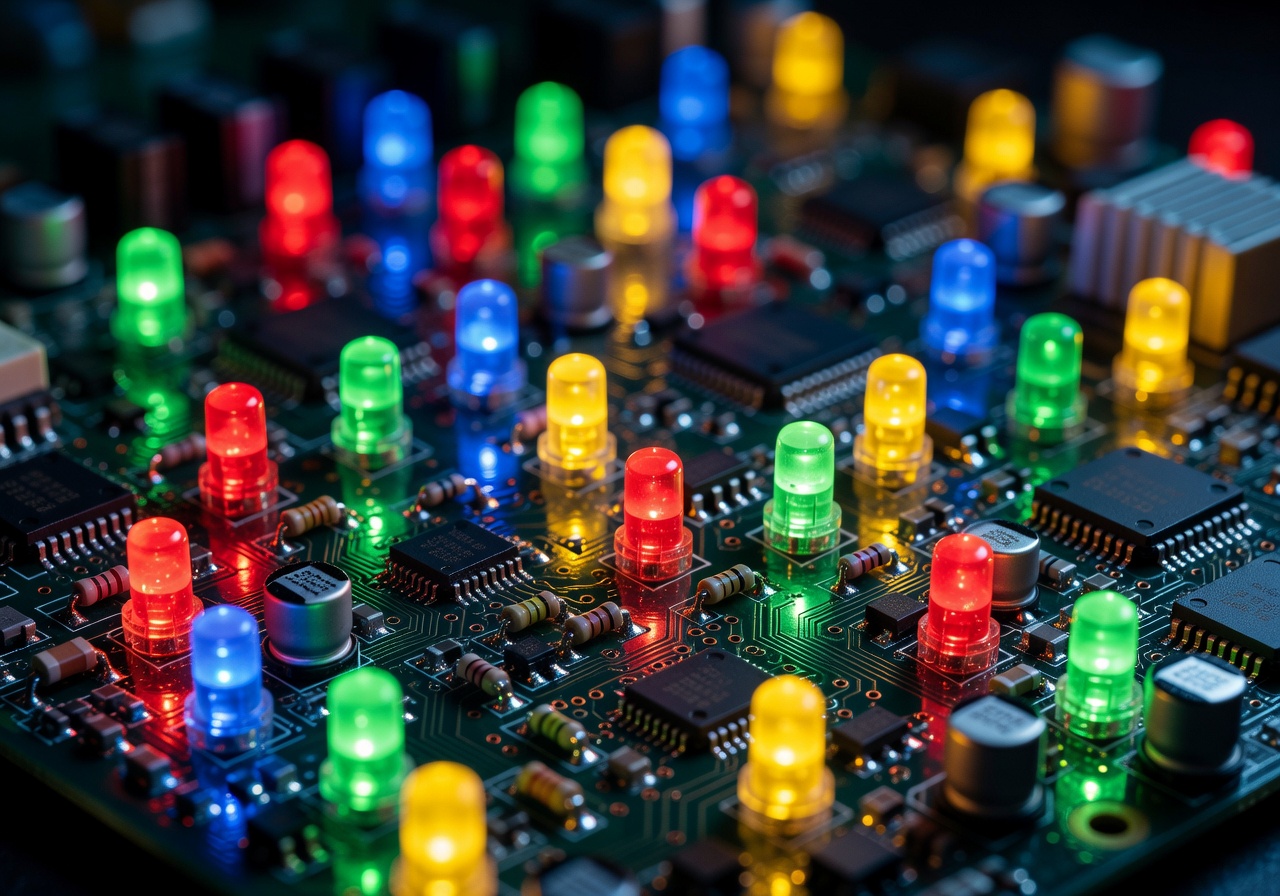 Red, green, blue, and yellow LEDs glowing - each color has different forward voltage
Types of Diodes
rectifier Diode
- General purpose
- Common: 1N4001-1N4007
Zener Diode
- Allows reverse current at specific voltage
- Used for voltage regulation
Schottky Diode
- Low forward voltage drop
- Fast switching
Light Emitting Diode (LED)
- Emits light when current flows
- Forward voltage: 2-3V
LED Polarity
Long leg = Anode (+)
Short leg = Cathode (-)
Flat side = Cathode (-)
LED Circuit
# Connect LED to 9V battery
battery_voltage = 9
led_voltage = 2  # typical LED forward voltage
led_current = 0.02  # 20mAresistor_value = (battery_voltage - led_voltage) / led_current
R = (9 - 2) / 0.02 = 350Ω
Using LEDs Safely
1. Always use a resistor - prevents burnout 2. Check polarity - LED only works one way 3. Current limiting - keep under 20mA typically
Summary
- Diodes allow current one direction only
- LEDs emit light when forward biased
- Always use a current-limiting resistor with LEDs
Next Lesson
In the next lesson, you'll learn about series and parallel circuit connections.
Quiz - Quiz - Diodes and LEDs
1. What is the main property of a diode?
2. How can you identify the cathode (negative) on an LED?
3. Why must an LED always have a resistor connected?