Voltage, Current, and Resistance
Voltage, Current, and Resistance
What is Voltage?
Voltage (V) is the electrical pressure that pushes current through a circuit. It's measured in Volts (V).
Think of voltage like water pressure in a pipe - the higher the pressure, the more water flows.
What is Current?
Current (I) is the flow of electrons through a conductor. It's measured in Amperes (A).
# Water analogy
Voltage = water pressure
Current = water flow rate
What is Resistance?
Resistance (R) opposes the flow of current. It's measured in Ohms (Ω).
Higher resistance = less current flow (like a narrow pipe).
Key Units
| Quantity | Symbol | Unit | Symbol |
|---|---|---|---|
| Voltage | V | Volt | V |
| Current | I | Ampere | A |
| Resistance | R | Ohm | Ω |
Electronic Components Overview
Before we dive deeper, let's familiarize ourselves with common electronic component symbols:
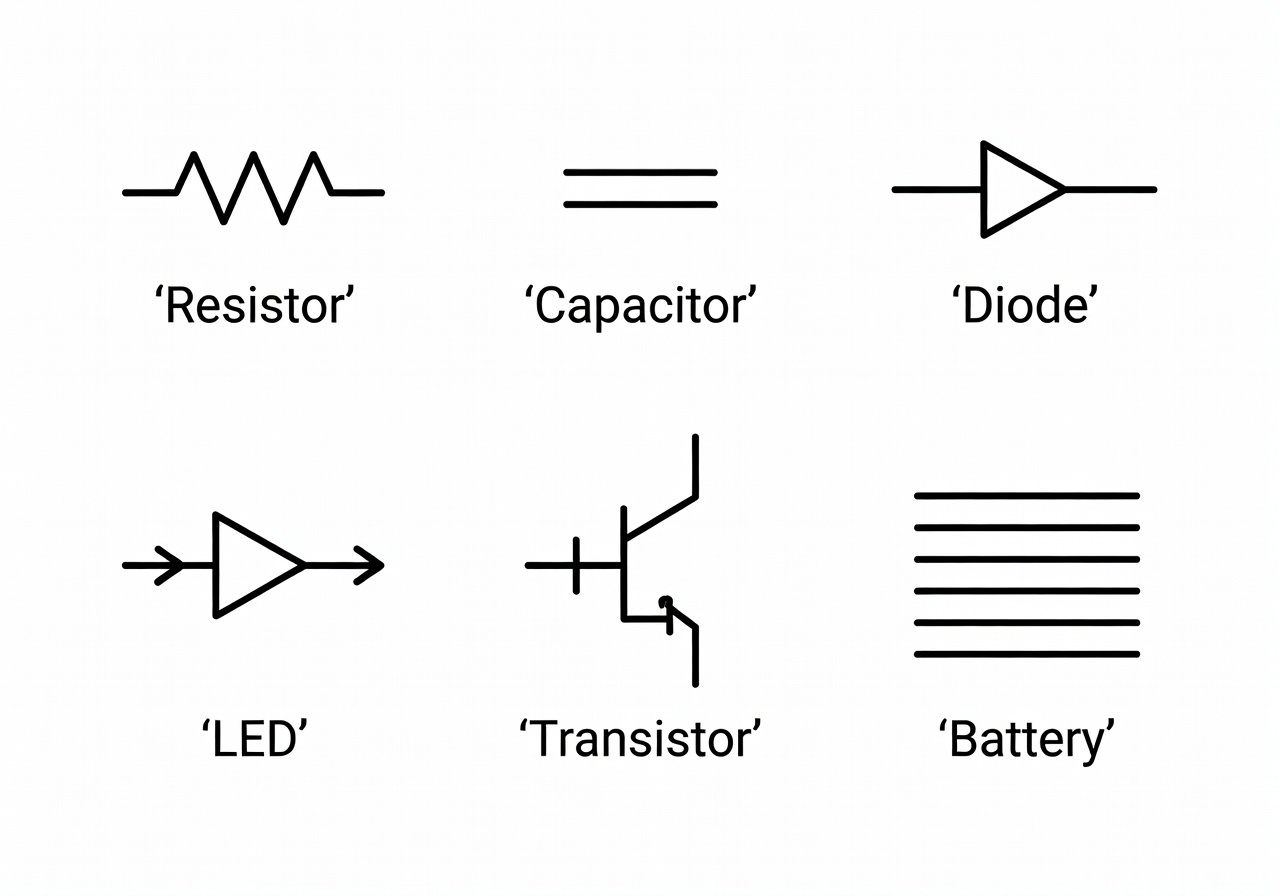 Common electronic component symbols used in schematics
Summary
- Voltage - electrical pressure, measured in Volts
- Current - electron flow, measured in Amps
- Resistance - opposition to flow, measured in Ohms
Next Lesson
In the next lesson, you'll learn about Ohm's Law - the fundamental relationship between voltage, current, and resistance.
Quiz - Quiz - Voltage, Current, and Resistance
1. In which units do we measure voltage?
2. What is electric current?
3. What does resistance measure?