Resistors
Resistors
What is a Resistor?
A resistor is a component that resists the flow of electrical current. It's used to:
- Limit current
- Divide voltage
- Protect components
Real Resistors
Here's what actual resistors look like:
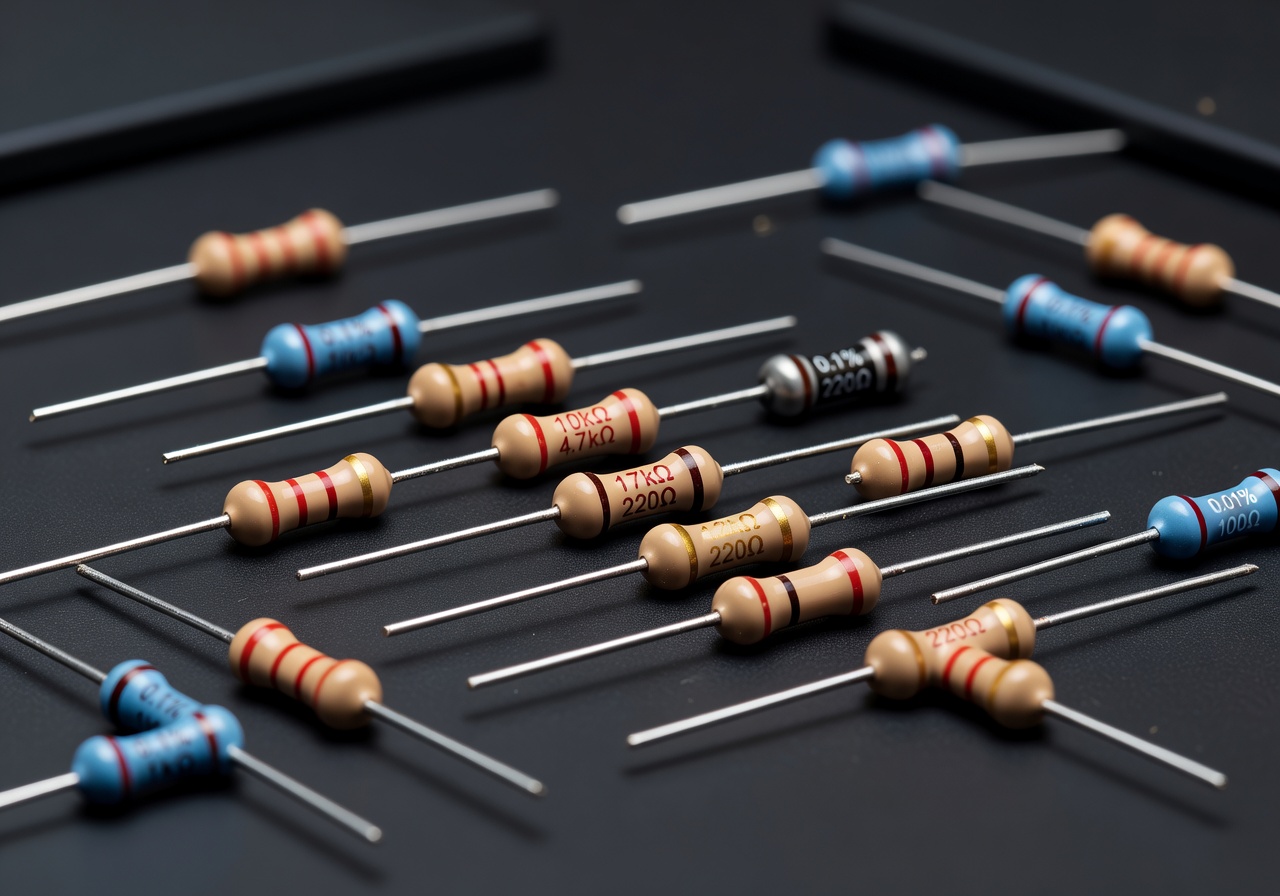 Carbon film and metal film resistors of various values
Resistor Symbols
- US/IEEE: Zigzag line
- IEC/European: Rectangle
Reading Resistor Color Codes
Resistors use colored bands to show their value:
4-Band Resistor
| Band | Meaning |
|---|---|
| 1st | 1st digit |
| 2nd | 2nd digit |
| 3rd | Multiplier |
| 4th | Tolerance |
Color Values
| Color | Digit | Multiplier | Tolerance |
|---|---|---|---|
| Black | 1Ω | - | |
| Brown | 1 | 10Ω | ±1% |
| Red | 2 | 100Ω | ±2% |
| Orange | 3 | 1kΩ | ±3% |
| Yellow | 4 | 10kΩ | ±4% |
| Green | 5 | 100kΩ | ±0.5% |
| Blue | 6 | 1MΩ | ±0.25% |
| Violet | 7 | 10MΩ | ±0.1% |
| Gray | 8 | - | ±0.05% |
| White | 9 | - | - |
| Gold | - | 0.1Ω | ±5% |
| Silver | - | 0.01Ω | ±10% |
Example: Red, Violet, Brown, Gold
- Red = 2
- Violet = 7
- Brown = ×10
- Gold = ±5%
Standard Resistor Values
Common values: 10Ω, 100Ω, 1kΩ, 10kΩ, 100kΩ, 1MΩ
Summary
- Resistors limit current flow
- Color bands show resistance value
- Always check tolerance before using
Next Lesson
In the next lesson, you'll learn about capacitors.
Quiz - Quiz - Resistors
1. What is the main purpose of a resistor?
2. In a 4-band resistor, what does the third band represent?
3. A resistor has bands: Brown, Black, Red, Gold. What is its value?