Cash vs Margin Accounts
Cash vs Margin Accounts
Introduction
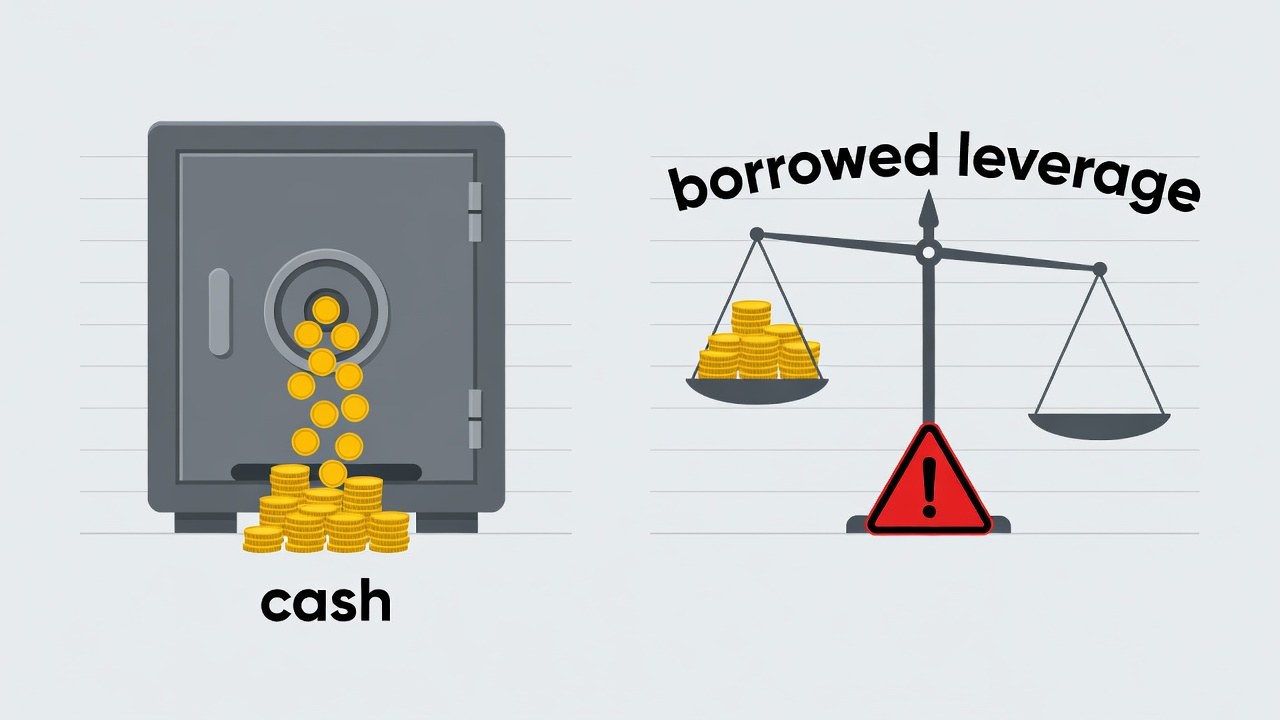
A brokerage account comes in two main types: cash and margin. They differ in whether you can borrow money to trade. This lesson explains the difference and the risk.
Cash Account
In a cash account, you trade only with money you've deposited. No borrowing.
- Can't spend more than you have
- No leverage
- Simpler and safer
- Best for beginners
Margin Account
In a margin account, the broker lends you money to buy securities, using your investments as collateral. This creates leverage.
- Control larger positions than your cash allows
- Amplifies gains and losses
- You pay interest on the borrowed amount
- Higher risk
The Key Difference
Cash account:  buy $1,000 with your $1,000
Margin account: buy up to $2,000 with $1,000 (plus borrowed $1,000)
How Borrowing Puts You at Risk
With margin you must repay the loan regardless of performance. If your position falls, you can lose more than your original deposit and face a margin call (next lesson).
Practical Advice
- Start with a cash account until you understand the risks
- Only consider margin when you fully understand leverage
- Never use margin with money you can't afford to lose
Real-World Example
Anna opens a cash account and buys $500 of an ETF with her deposited $500. Her friend opens a margin account and uses $500 to control $1,000 of exposure — but if the position falls, the friend faces losses and interest on the borrowed $500.
Summary
- Cash account = trade only with your own deposited money
- Margin account = borrow from the broker with collateral (leverage)
- Margin amplifies both gains and losses and charges interest
- Margin can produce losses beyond your deposit
- Start with a cash account; treat margin as advanced and risky
Next Lesson
How margin and leverage really work.
Quiz - Quiz - Cash vs Margin Accounts
1. In a cash account you can only trade with...
2. A margin account lets you...
3. Margin amplifies...
4. Which is safer for a beginner?