How Trades Settle: T+1 and T+2
How Trades Settle: T+1 and T+2
Introduction
When you place an order, the trade is agreed instantly — but money and shares are actually exchanged later, in a process called settlement. This lesson explains T+1/T+2 and why it exists.
Trade vs Settlement
Trading and settlement are two separate steps:
1. Trade — you and a seller agree on price and quantity (instant) 2. Settlement — cash and securities are actually exchanged (later)
Until settlement completes, the trade exists as an obligation.
The "T+" Notation
Settlement is quoted as "T+n" — business days after the trade date (T):
- T+1 — settles one business day later
- T+2 — settles two business days later
Why Settlement Takes Time
Settlement used to be slow because of paper certificates and manual record-keeping. Good settlement requires:
- Matching buyer and seller records
- Transferring ownership in the central depository
- Confirming cash and securities move correctly
The Role of Clearing Houses
Clearing houses sit between buyers and sellers to reduce risk. They:
- Guarantee trades even if one party defaults
- Net obligations so less money changes hands
- Manage the flow of securities and cash
Why It Matters to You
Settlement affects when you:
- Receive the shares (when you buy)
- Receive the cash (when you sell)
- Have access to buy with unsettled-sale proceeds ("free riding" rules)
Real-World Example
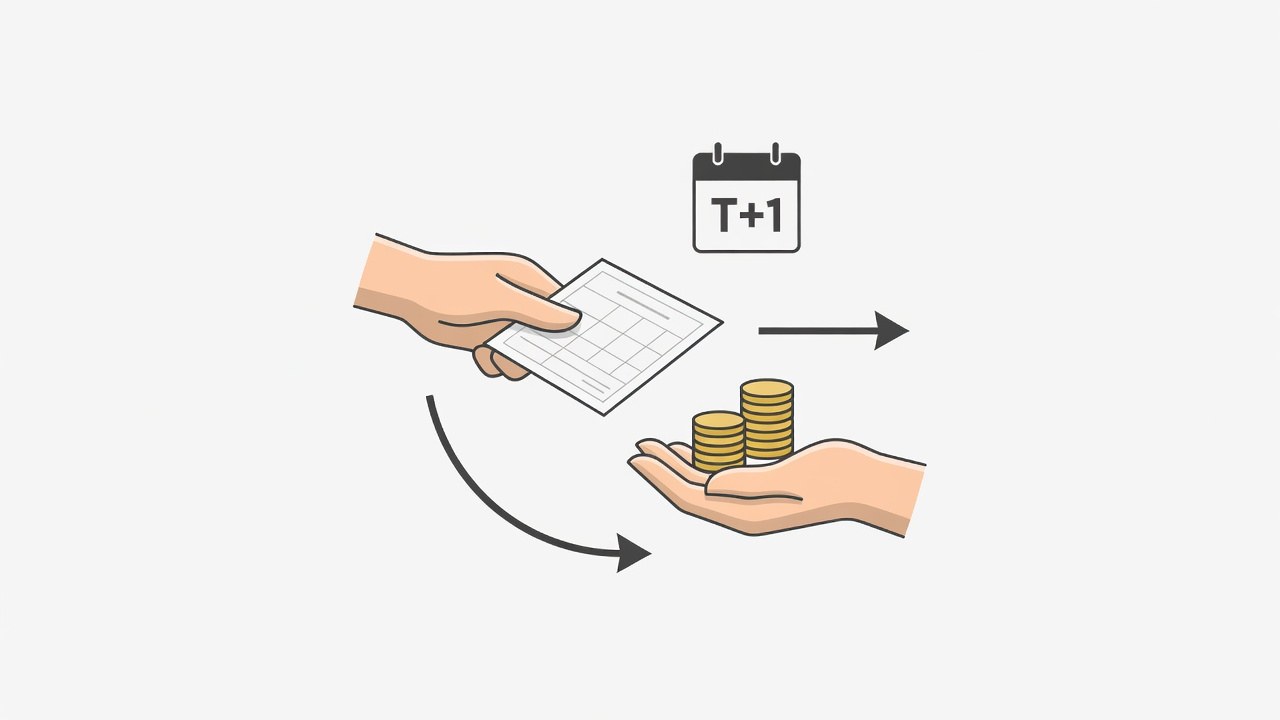
You sell shares on Monday. Under T+1 settlement, the cash settles on Tuesday — even though you agreed the price on Monday. The price in the trade is locked in at the agreement.
Summary
- Trade (agreement) and settlement (exchange) are separate
- "T+n" counts business days after the trade date
- T+1 shortens the gap and reduces risk
- Clearing houses guarantee and net trades
- Settlement timing affects when cash and shares are available
Next Lesson
Built-in brakes: circuit breakers and volatility guards.
Quiz - Quiz - How Trades Settle
1. Settlement means...
2. T+1 settlement means the trade completes...
3. Clearing houses help to...
4. Trading and settlement are...