Execution Quality and Slippage
Execution Quality & Slippage
Introduction
How well your order gets filled — at what price and how fast — is execution quality. Sometimes you get a worse price than expected; that's slippage. This lesson explains both.
Execution Quality
Execution quality covers:
- Price — how close to the best available price you fill
- Speed — how quickly your order executes
- Reliability — whether your order is filled as intended
- Cost — how much spread/slippage you pay
What Is Slippage?
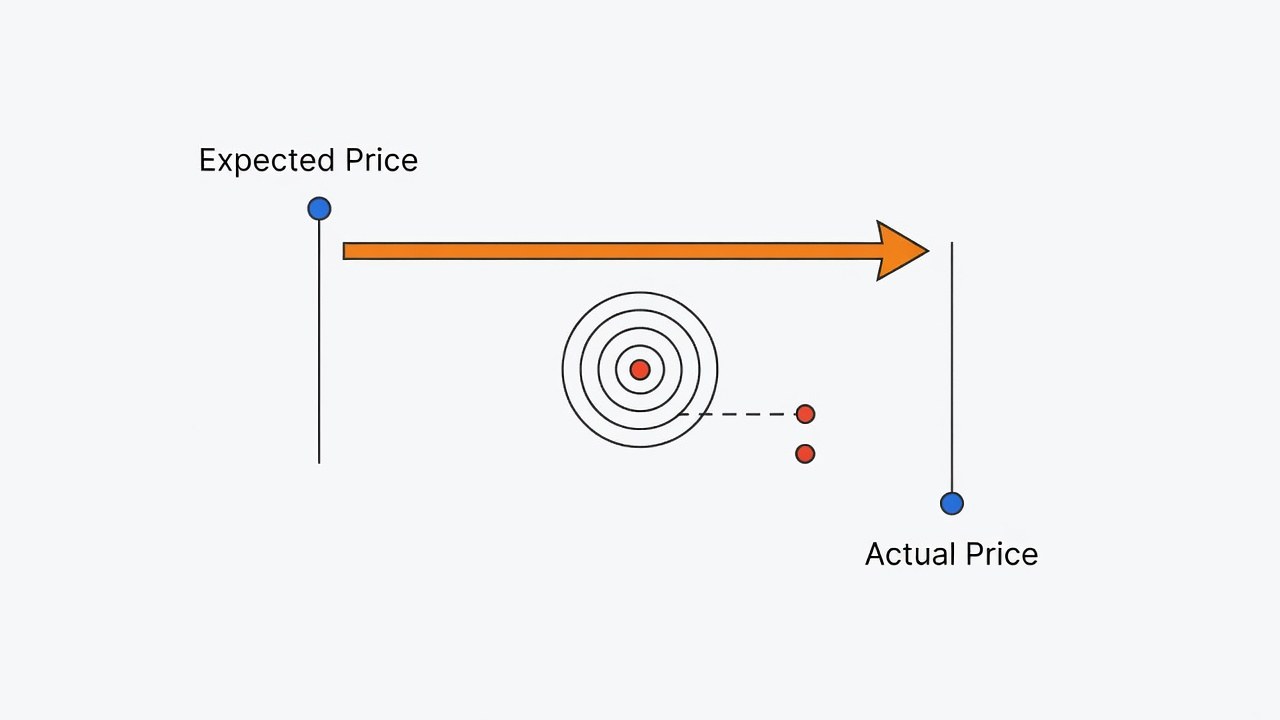
Slippage is the difference between the price you expected and the price you actually got.
Expected: $50.00 Actual: $50.05 -> slippage $0.05
Slippage is usually negative (you pay more when buying, get less when selling).
When Slippage Gets Worse
- High volatility — prices move between order and fill
- Low liquidity — few traders means bigger price impact
- Large orders — moving the market against you
- Market orders in fast markets
How to Reduce It
- Use limit orders to cap the price you'll accept
- Trade liquid securities with tight spreads
- Avoid trading during violent news spikes
- Keep order sizes reasonable relative to liquidity
Real-World Example
You place a market order to buy during a news spike. The price jumps between your click and the fill, so you pay $50.12 instead of $50.00 — $0.12 slippage. A limit order at $50.05 would have capped your cost.
Summary
- Execution quality = how well an order is filled (price, speed, reliability)
- Slippage = difference between expected and actual fill price
- It worsens with volatility, low liquidity, and large orders
- Limit orders and liquid assets reduce slippage
- Watching execution quality keeps your real costs low
Next Lesson
Order conditions: time-in-force and flags.
Quiz - Quiz - Execution Quality & Slippage
1. Slippage is...
2. Slippage is usually worse when...
3. Execution quality refers to...
4. You can reduce slippage by using...