Margin Calls and Forced Liquidation
Margin Calls & Forced Liquidation
Introduction
If your leveraged account drops, the broker demands more money — a margin call. If you can't cover it, positions are forcefully sold. This lesson explains the process and its risks.
What Is a Margin Call?
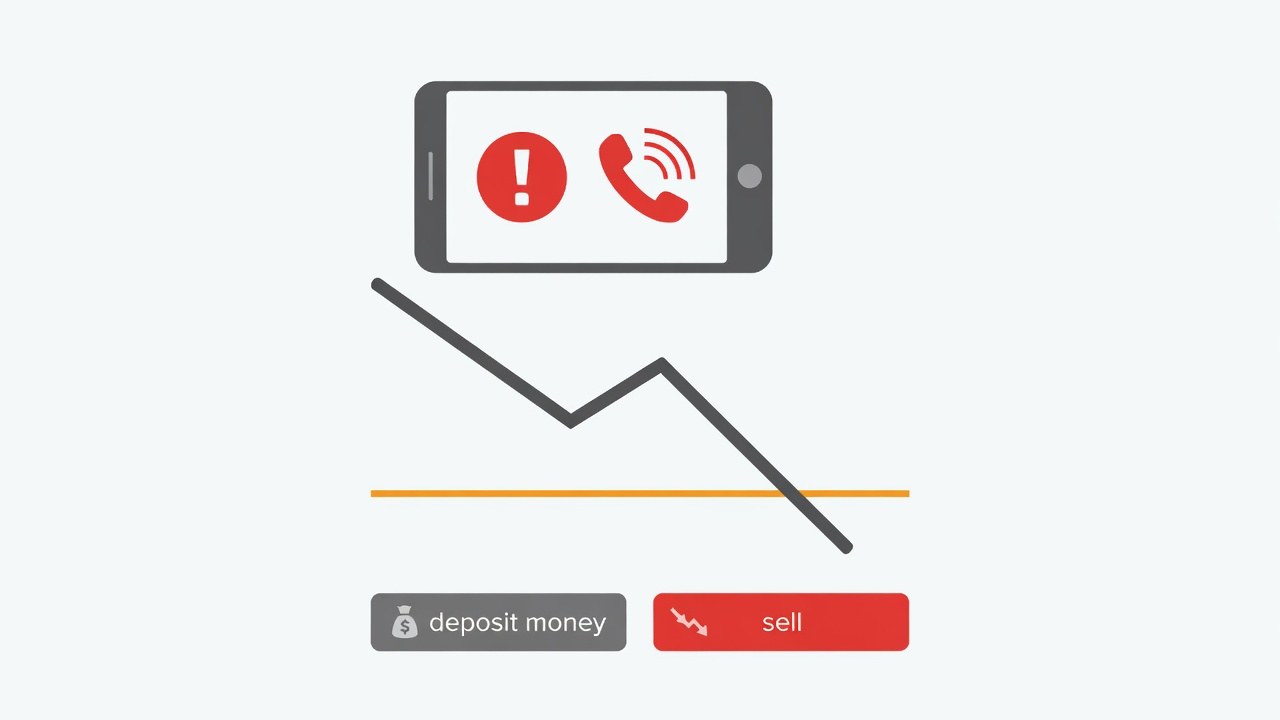
A margin call is a demand from the broker to deposit more cash (or securities) when your account equity falls below the maintenance margin requirement.
Your equity drops below the required level
        |
        v
Broker issues a MARGIN CALL: deposit more money
Why It Happens
Your account has a minimum equity threshold based on the borrowed amount. When the value of your positions falls, your equity shrinks — and can fall below the minimum.
If You Meet the Call
You deposit additional funds to bring equity back above the requirement, and the position continues.
If You Don't
If you can't or don't meet the call, the broker liquidates (sells) some of your positions to repay the loan. This can happen without your ideal timing.
The Worst Case
In a fast crash, forced selling can happen at bad prices, and you could owe more than your initial deposit — the broker's loss becomes your debt.
Real-World Example
You buy $2,000 of shares with $1,000 of your money and $1,000 borrowed. The shares fall 25% to $1,500. Your equity = $500, below the maintenance requirement. The broker issues a margin call; if you don't deposit, it sells shares to recover its $1,000.
Summary
- A margin call demands more money when equity falls below maintenance
- Meet it by depositing funds or selling assets
- If unmet, the broker force-sells positions to recover its loan
- Fast crashes can force bad sales and losses beyond your deposit
- This is why leverage is risky — always keep a cash buffer
Next Lesson
Execution in practice: quality, slippage, and order conditions.
Quiz - Quiz - Margin Calls & Liquidation
1. A margin call happens when...
2. To meet a margin call you usually must...
3. If you don't meet a margin call, the broker may...
4. A margin call can leave you...