Fees and Costs in Practice
Fees & Costs in Practice
Introduction
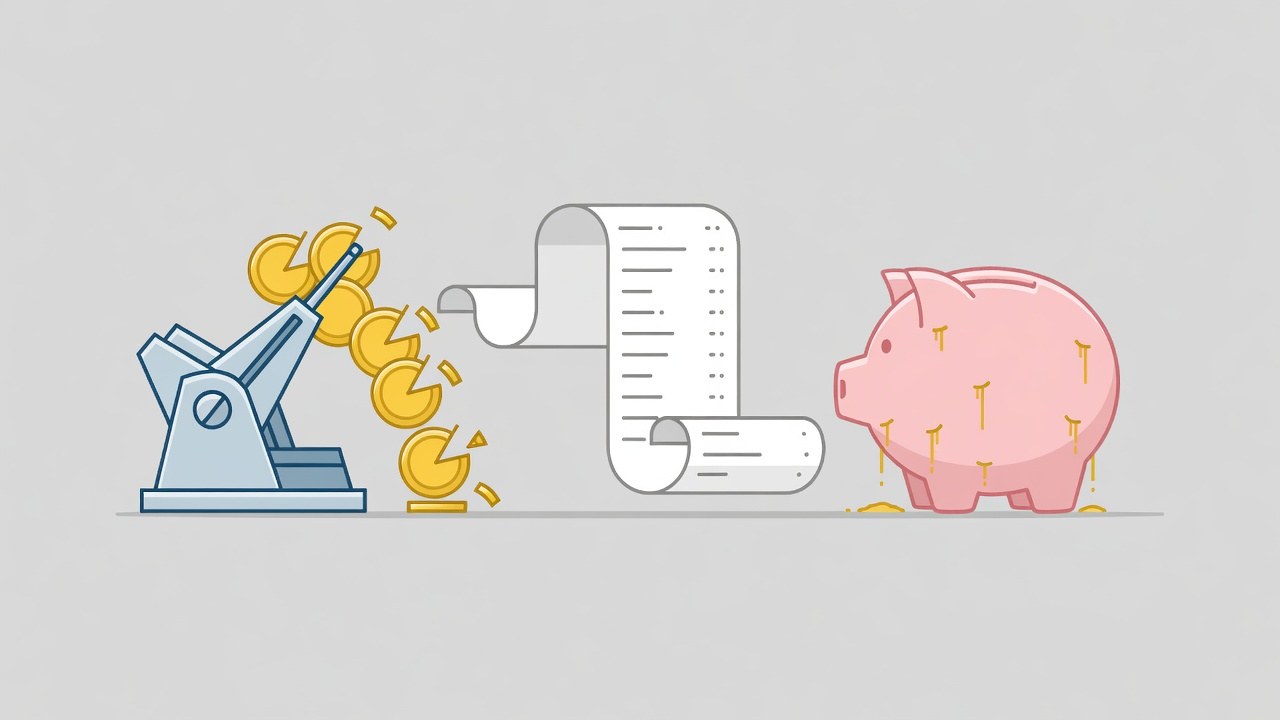
Fees quietly reduce returns. In practice you pay commissions, spreads, and currency costs — and how often you trade matters. This lesson shows how to keep costs low.
The Real Cost Stack
- Commissions — per-trade broker fees
- Spreads — the bid/ask gap you cross
- Currency (FX) fees — when trading in a foreign currency
- Platform/account fees — monthly or annual charges
- Fund expense ratios — for funds/ETFs
Frequency Is a Cost Multiplier
Every trade has a cost. Trading frequently multiplies those costs and can eat a large share of gains.
Trade 12 times a year with fees+spread each time
vs. 3 times a year -> the difference compounds over years
Foreign Currency Trading
If you buy US stocks from Europe, you convert your currency (FX) on each trade. FX fees and spreads add up — compare brokers and consider FX efficiency.
How to Minimize
- Pick a low-fee, regulated broker
- Trade less and hold longer
- Prefer low-cost index funds/ETFs
- Use limit orders to control spreads/slippage
- Read the full fee schedule before investing
The Long-Term Impact
A 1% difference in annual costs, compounded over decades, can be the difference between a comfortable retirement and a disappointing one. Fees are the one variable you fully control.
Real-World Example
Two investors each earn 7% a year. One pays 0.5% in fees, the other 1.5%. After 30 years on the same starting amount, the lower-cost investor ends up significantly ahead.
Summary
- Real costs: commissions, spreads, FX fees, platform fees, expense ratios
- Trading more often multiplies costs
- Foreign-currency trading adds FX costs
- Low fees and reasonable trading frequency save the most
- Fees are the cost you can control — minimize them
Next Lesson
How investors are protected, and how to spot scams.
Quiz - Quiz - Fees & Costs in Practice
1. Common real costs include... multiple answers
2. High trading frequency increases...
3. To minimize costs you should...
4. FX (currency) fees matter when...