How Margin and Leverage Work
How Margin & Leverage Work
Introduction
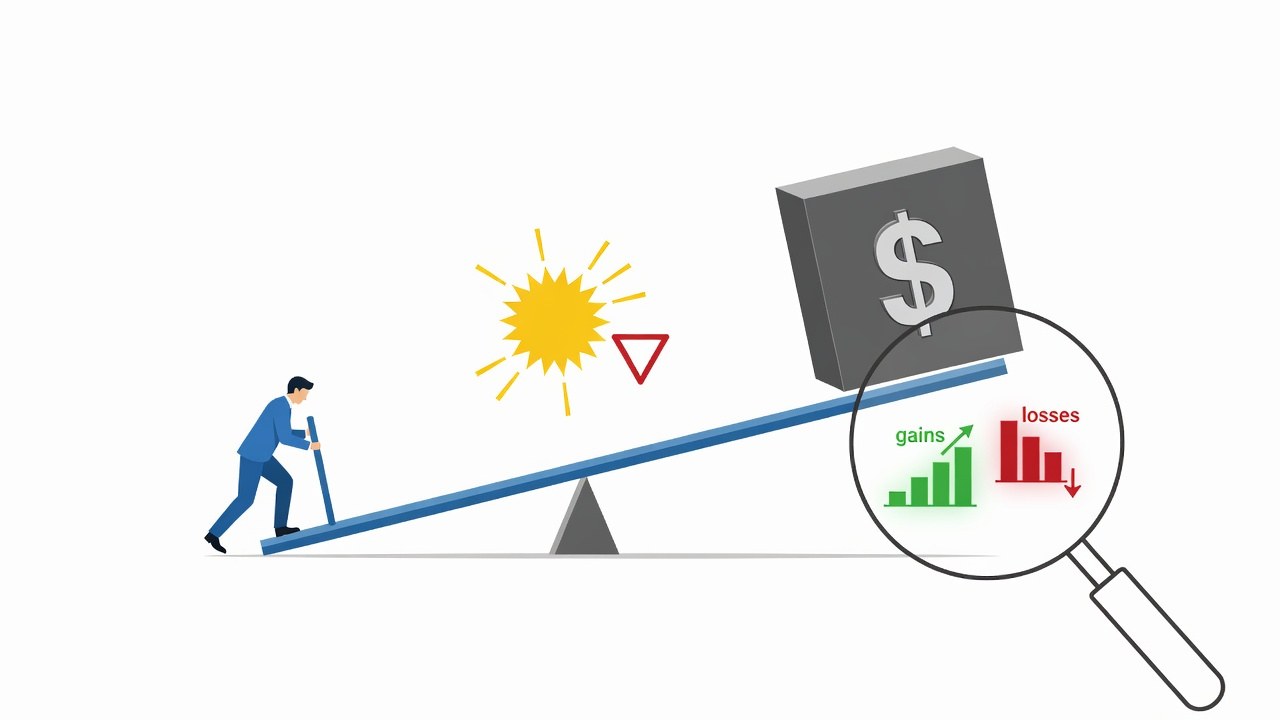
Leverage lets you control a larger position with a smaller amount of your own capital by borrowing. It's powerful — and dangerous. This lesson explains the mechanics and the math.
What Leverage Is
Leverage means using borrowing to increase your exposure. You put up a portion and the broker lends the rest.
Own capital:  $1,000
Leverage:     2x
Position:     $2,000 (your $1,000 + $1,000 borrowed)
The Math of Amplification
Leverage multiplies percentage moves relative to your own money:
Position $2,000 rises 10% -> gain $200 on your $1,000 = +20% (2x)
Position $2,000 falls 10% -> loss $200 on your $1,000 = -20% (2x)
Same 10% price move, but double the impact on your capital.
Margin and Interest
The broker charges interest on the amount you borrow. Over time, this interest is a cost you must cover from returns.
Requirement: Maintenance Margin
You must keep a minimum level of equity in the account (the maintenance margin). If your equity falls below it, the broker issues a margin call (next lesson).
The Danger
Leverage cuts both ways:
- Great when prices rise
- Devastating when they fall
- You can lose more than your deposit
Real-World Example
With 3x leverage you control $3,000 with $1,000. A 33% drop on the position means a ~100% loss of your money. A slightly bigger drop puts you negative. This is why unleveraged investing is the sensible default.
Summary
- Leverage = controlling more exposure than your capital by borrowing
- It amplifies both gains and losses proportionally
- You pay interest on borrowed funds
- Maintenance margin must be maintained
- Losses can exceed your deposit — leverage is high risk
Next Lesson
What happens when it goes wrong: margin calls and forced liquidation.
Quiz - Quiz - How Margin & Leverage Work
1. Leverage means...
2. If you invest $1,000 with 2x leverage, you control...
3. With leverage, a 10% loss on the position is amplified to...
4. Borrowing to invest is riskier because...