Bond Pricing, Yield and Duration
Bond Pricing, Yield & Duration
Introduction
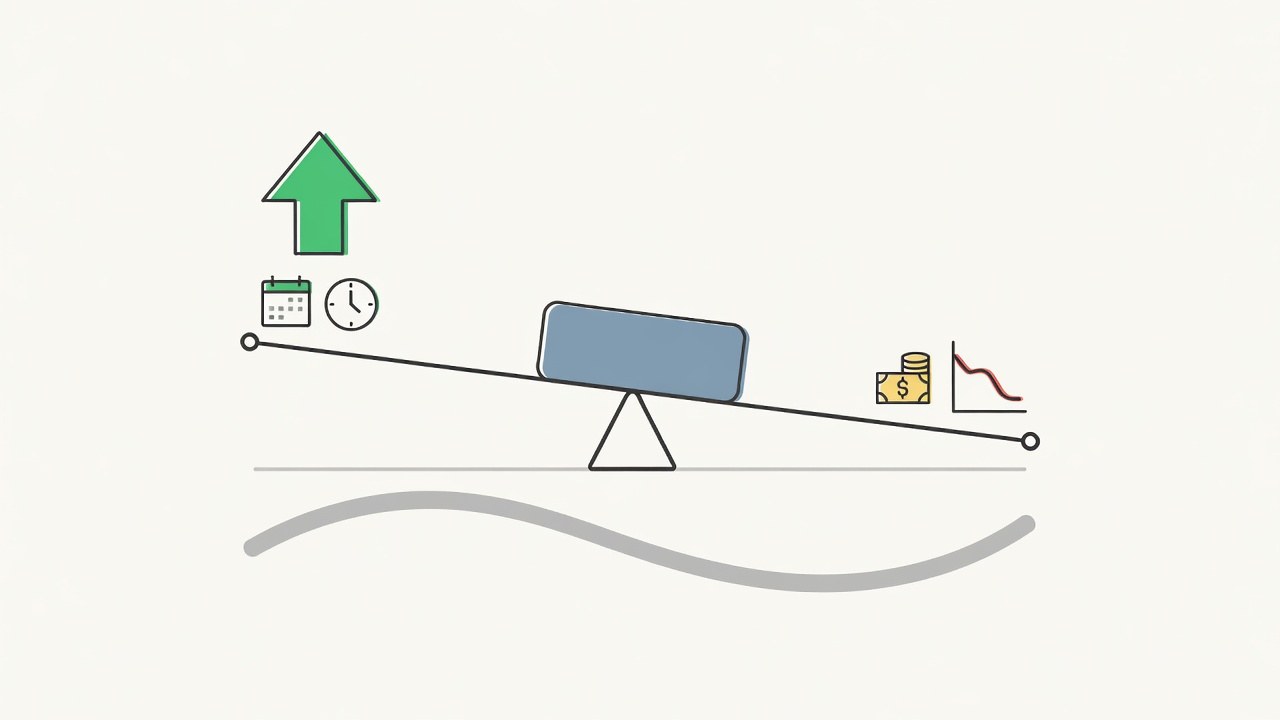
Bond prices move opposite to interest rates, and yield tells you the true return. Duration measures how sensitive a bond is to rate changes. This lesson demystifies these three ideas.
Bond Prices and Interest Rates
There is an inverse relationship: when market interest rates rise, existing bond prices fall, and vice versa.
Interest rates UP   ->  existing bond prices DOWN
Interest rates DOWN ->  existing bond prices UP
Why? A new bond issued at a higher rate pays more, so older, lower-coupon bonds must fall in price to stay competitive.
Yield
There are a few yields:
- Current yield — annual coupon ÷ current price
- Yield to maturity (YTM) — total return if held to maturity, including coupons and the price change to par
Premium and Discount
- A bond trading above par sells at a premium (when its coupon beats current rates)
- A bond trading below par sells at a discount (when its coupon lags current rates)
Duration
Duration estimates how much a bond's price changes for a 1% move in interest rates.
High duration  ->  price swings more with rates
Low duration   ->  price swings less
Longer-maturity bonds generally have higher duration.
Real-World Example
You hold a 30-year bond yielding 3%. Market rates rise to 4%. Your bond's price falls because new bonds pay more. The longer the maturity (duration), the larger the price drop.
Summary
- Bond prices fall when rates rise (and rise when rates fall)
- Yield to maturity captures coupons plus price change to par
- Above par = premium; below par = discount
- Duration measures sensitivity to interest-rate changes
- Longer duration = more price risk
Next Lesson
Government bonds vs corporate bonds.
Quiz - Quiz - Bond Pricing & Yield
1. When interest rates rise, existing bond prices typically...
2. Yield to maturity accounts for...
3. Longer duration usually means...
4. A bond trading above par is selling at...