Commodities and Precious Metals
Commodities & Precious Metals
Introduction
Commodities are raw materials — energy, metals, and agricultural products. Precious metals like gold and silver are a special category often used as a store of value. This lesson explains these assets.
What Are Commodities?
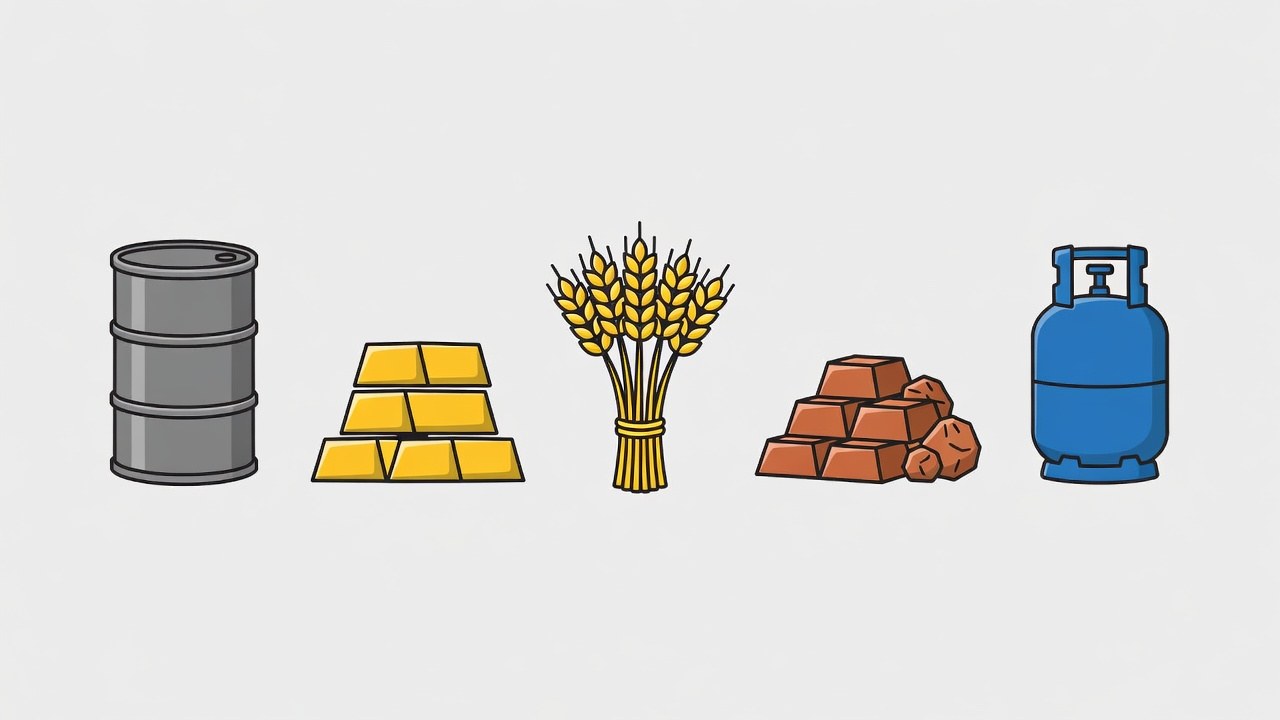
Commodities are basic goods used to produce other products:
- Energy — oil, natural gas, coal
- Metals — gold, silver, copper, aluminum
- Agriculture — wheat, corn, coffee, livestock
Gold as a Store of Value
Gold has long been seen as a store of value and an inflation hedge. When inflation rises or markets get rocky, investors often turn to gold.
- No default risk (it's not debt)
- Not income-generating on its own
- Price driven by sentiment, inflation, and geopolitics
Why Prices Move
Commodity prices are driven mainly by supply and demand, plus geopolitics:
- Wars and sanctions can spike oil prices
- Poor harvests raise food prices
- Strong demand raises industrial metal prices
How to Invest
Investing in commodities is harder than stocks:
- Futures — direct but complex and leveraged
- ETFs that track commodities — simpler
- Mining/energy stocks — indirect exposure
- Physical metals (gold bars/coins) — direct but storage costs
Risk Profile
Commodities are often volatile and cyclical. Used sparingly, they can diversify a portfolio and hedge against inflation.
Summary
- Commodities are raw materials (energy, metals, agriculture)
- Gold is a store of value and inflation hedge
- Prices are driven by supply, demand, and geopolitics
- Invest via futures, ETFs, mining stocks, or physical metals
- Volatile — use as a modest diversifier, not a core holding
Next Lesson
Real estate and how to invest in it — including REITs.
Quiz - Quiz - Commodities & Precious Metals
1. Commodities include... multiple answers
2. Gold is often viewed as...
3. Commodity prices are driven heavily by...
4. Investing in commodities via futures...