Options: Calls and Puts
Options: Calls & Puts
Introduction
An option gives the holder the right, but not the obligation, to buy or sell an asset at a set price within a certain time. This lesson covers the two basic types — calls and puts — and how they work.
Call Options
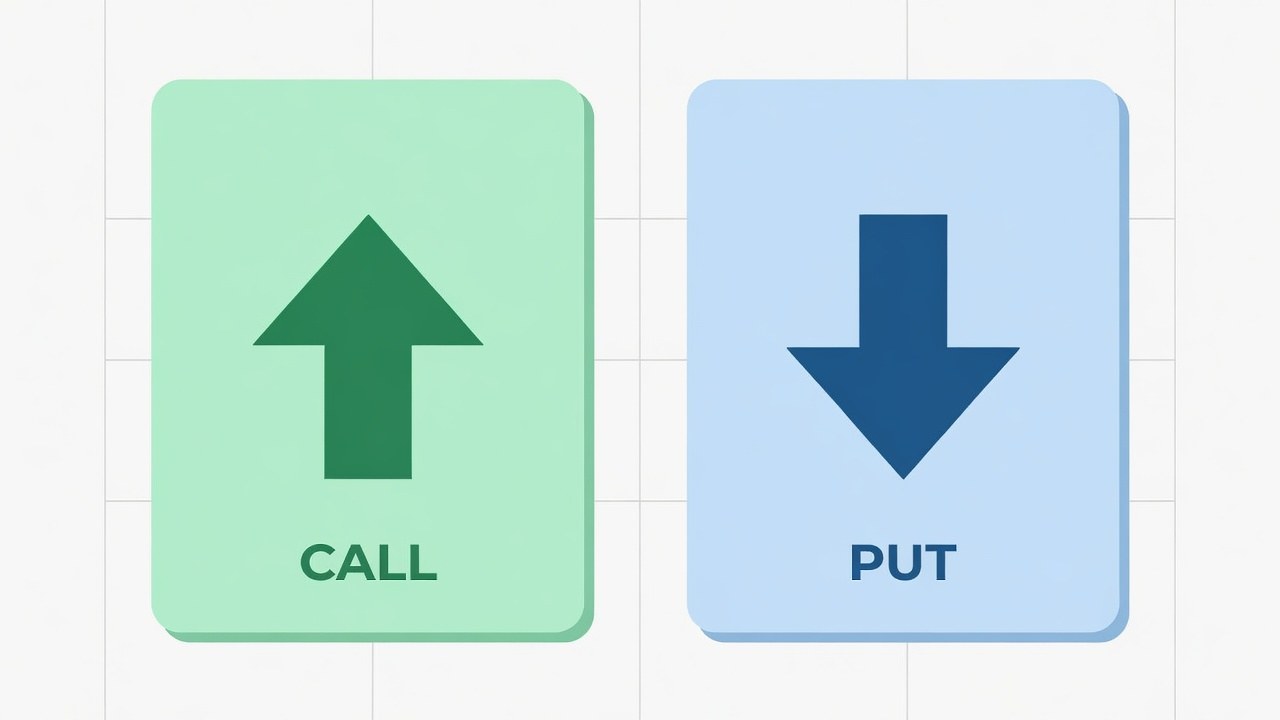
A call option gives the buyer the right to buy the underlying asset at a set price (the strike price) by a certain date.
- Useful if you expect the price to rise
- You profit if the price rises above the strike by more than the premium
Put Options
A put option gives the buyer the right to sell the underlying asset at the strike price by a certain date.
- Useful if you expect the price to fall (or to protect a position)
- You profit if the price falls below the strike by more than the premium
Premiums
Buying an option costs a premium — the price of the option itself. This is your maximum loss as a buyer.
Buyer max loss = the premium paid
Buyer profit    = (price move) - premium
Rights vs Obligations
- Buyer of an option has the right to exercise — but no obligation
- Seller (writer) of an option has the obligation to fulfill if the buyer exercises
Why Options Are Used
- Speculation — bet on direction with limited risk (buyer)
- Hedging — protect a portfolio (buying puts as insurance)
- Income — selling options for premium (advanced)
Summary
- Call = right to buy at a set price by a date
- Put = right to sell at a set price by a date
- Buyers pay a premium; max loss = premium
- Buyers have rights; sellers have obligations
- Used for speculation, hedging, and income
Next Lesson
Beyond stocks and bonds: alternative assets.
Quiz - Quiz - Options: Calls & Puts
1. A call option gives the right to...
2. A put option gives the right to...
3. The buyer of an option...
4. An option's maximum loss for the buyer is...