Grid-Tied (On-Grid) Systems
Grid-Tied (On-Grid) Systems
Introduction
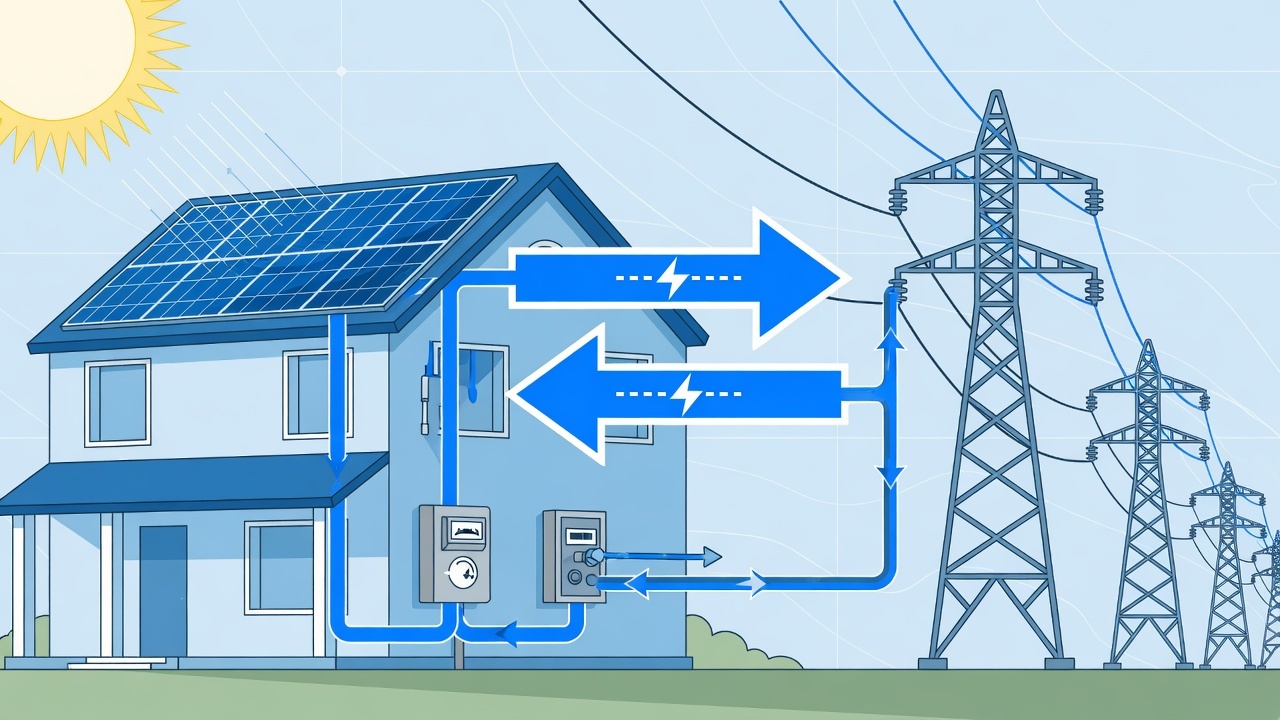
A grid-tied (on-grid) system is the most common type of residential solar installation. It is physically connected to the utility grid and uses it both as a source of power when the sun isn't shining and as a "battery" to absorb surplus energy. This lesson covers how it works, its advantages, and its critical limitation.
How It Works
In a pure grid-tied system, the panels produce DC power that the inverter converts to AC. Part of that AC powers the home directly; any surplus is exported to the grid. When the panels can't cover the load, the home draws the difference from the grid.
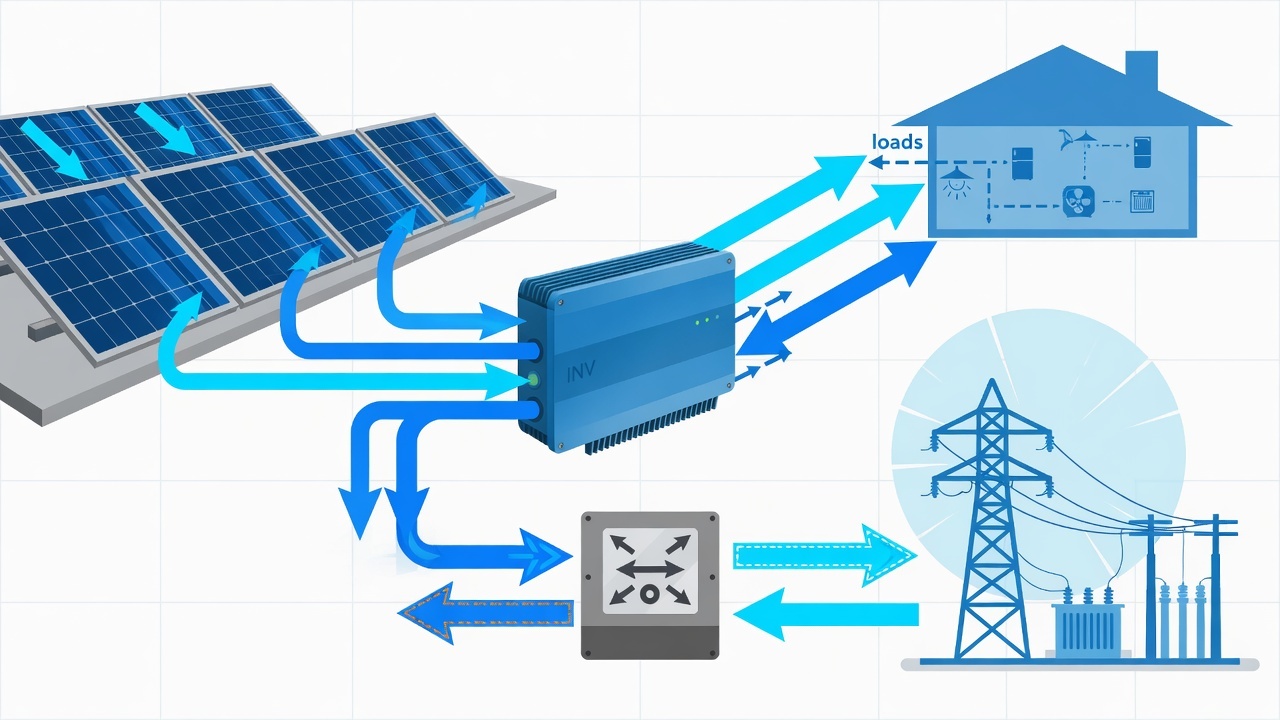
   PV Panels (DC)
        |
        v
      Inverter
        |
        v
   House loads  <--+-- meter --+--> Utility grid
                    ^           ^
                    |           |
            panels cover loads  surplus exported
                               deficit drawn from grid
The meter measures energy flowing in both directions — that's what enables net metering or feed-in tariffs.
The Anti-Islanding Safety Feature
The most important behavior of an on-grid inverter is anti-islanding. If the grid goes down, the inverter must shut off within moments and disconnect from the grid.
Why? If it kept feeding power into a dead grid, it could:
- Electrocute utility workers repairing the lines
- Create an "island" of energized wire on a supposedly dead grid
Advantages
- Lower cost — no battery needed, simpler hardware
- Higher efficiency — the grid absorbs all surplus, no wasted energy
- Simpler maintenance — fewer components
- Fast payback — feeds surplus energy back to the grid
Disadvantages
- No backup power during outages (anti-islanding shuts it down)
- Dependent on the grid — no grid, no solar
- Requires grid connection and often permits/agreements with the utility
When It's the Right Choice
Grid-tied is ideal when:
- The grid is reliable in your area
- Your main goal is lowering your electricity bill
- You have net metering or a good feed-in tariff
- You either don't need backup or accept grid dependence
Real-World Example
A home with a 6 kW grid-tied system produces more than it uses at midday. The surplus is exported to the grid and credited. At night, the house draws from the grid using those credits. During a storm blackout, the inverter safely disconnects and the home goes dark — unless a battery backup is added.
Summary
- On-grid systems connect to the utility grid and exchange power both ways
- Surplus is exported; deficits are imported
- Anti-islanding forces the inverter off during outages for safety
- Pros: lower cost, higher efficiency; Cons: no backup and grid dependence
Next Lesson
If you need independence from the grid, an off-grid system is the answer — but it brings its own complexity.
Quiz - Quiz - Grid-Tied (On-Grid) Systems
1. A grid-tied (on-grid) system...
2. What happens to an on-grid system during a grid blackout (without backup)?
3. The main advantage of a pure grid-tied system is...