Hybrid Systems: Best of Both Worlds
Hybrid Systems: Best of Both Worlds
Introduction
A hybrid PV system combines the benefits of both architectures: it stays connected to the grid (so you can export surplus and import when needed) AND includes a battery (so you have backup power and can store energy). This is the most modern and flexible residential setup.
How It Works
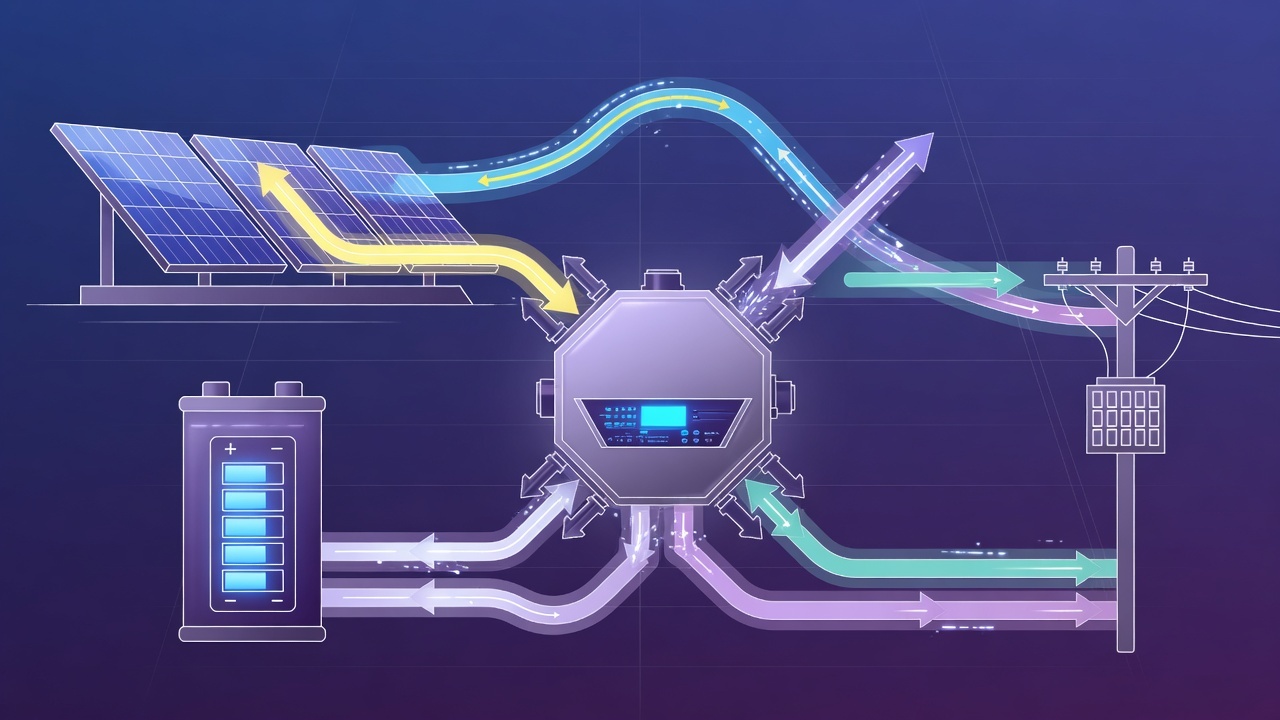
The key component is a hybrid inverter, which manages both the grid connection and the battery. It can juggle four energy flows:
1. Panels → powering the home 2. Panels → charging the battery 3. Battery → powering the home (at night or during outages) 4. Surplus → exporting to the grid
   PV Panels (DC)
        |
        v
   Hybrid Inverter
      |              |
      |  charge      |  discharge
      v              v
   [ DC Battery ]   AC house loads
                        |
                        +---> Grid (import/export)
The hybrid inverter also provides backup power during grid outages — unlike a pure grid-tied system, it can switch to battery power and keep the essentials running.
AC vs DC Battery Coupling
Hybrid systems use one of two ways to connect the battery:
DC Coupled
The battery connects to the DC bus of the inverter. Panels charge the battery directly through the inverter's DC input. This is more efficient because there's only one conversion. Most modern all-in-one hybrid inverters use DC coupling.
AC Coupled
A separate battery inverter connects to the AC side. Common when adding a battery to an existing grid-tied system (retrofit). Slightly less efficient because of the double AC conversion.
  DC coupled:   Panels -> Inverter/MPPT -> Battery -> Inverter -> AC loads
  AC coupled:   [Grid-tied inverter -> AC] <- Battery inverter -> AC loads
Advantages
- Backup power during outages
- Self-consumption — store your own solar and use it later instead of buying grid power
- Lower energy bills — shift surplus into evening/night
- Flexibility — grid available as a safety net
Disadvantages
- Higher upfront cost than grid-tied (battery + more complex inverter)
- More components to manage and maintain
- Slightly more complex configuration and monitoring
When to Choose Hybrid
Hybrid is ideal when:
- You have frequent or costly outages and want backup
- Your grid tariffs make self-consumption attractive (time-of-use pricing)
- You want to grow into independence without going fully off-grid
- You can justify the battery investment
Real-World Example
A home has a hybrid 8 kW inverter, a 10 kWh LFP battery, and a 6 kW array. On a sunny day it powers the house from the panels, charges the battery, and exports the rest. At night it runs on battery power until depleted, then imports from the grid. During a blackout, the battery keeps the fridge, lights, and router running.
Summary
- Hybrid = grid connection + battery backup in one system
- The hybrid inverter manages panels, battery, loads, and grid
- DC coupling is more efficient; AC coupling is common for retrofits
- Pros: backup, self-consumption, savings; Cons: higher cost and complexity
Next Lesson
Let's zoom into the brain of the system — inverters, their types, and how MPPT works.
Quiz - Quiz - Hybrid Systems
1. A hybrid PV system combines...
2. A key benefit of a hybrid system is...
3. Hybrid inverters typically feature...