Off-Grid Systems
Off-Grid Systems
Introduction
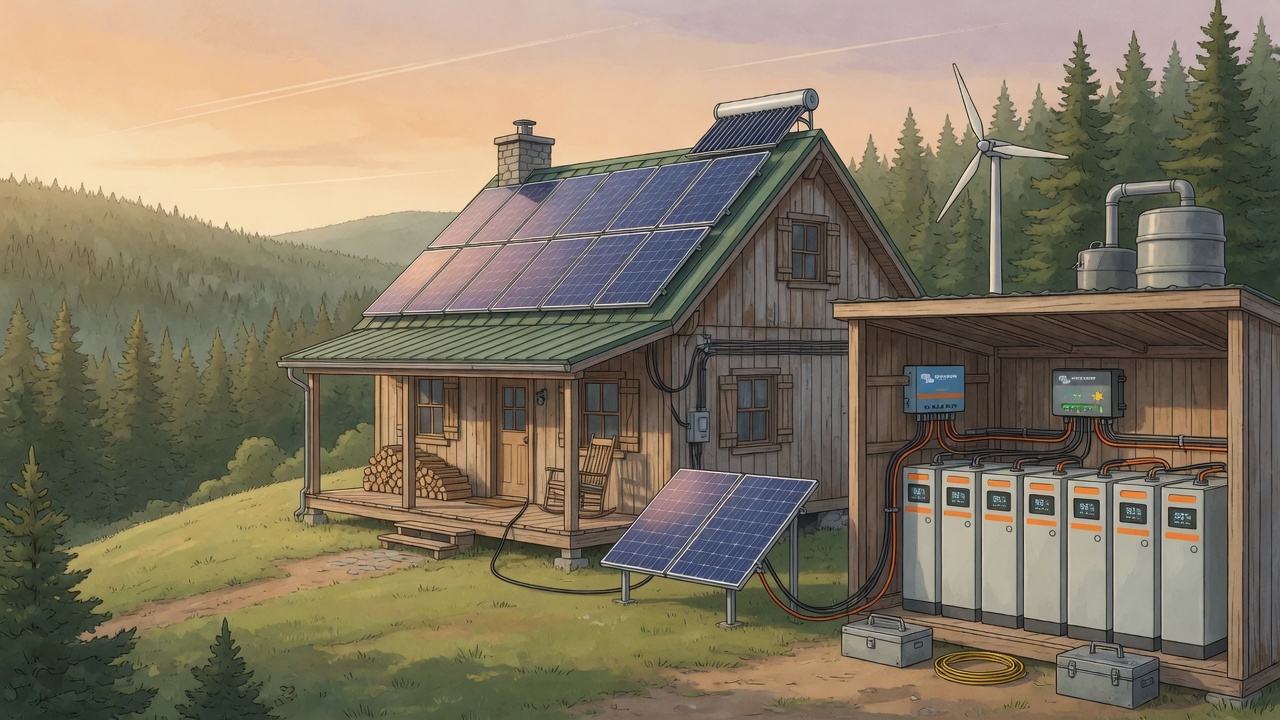
An off-grid system is completely independent of the utility grid. It generates its own power, stores it, and supplies the loads entirely on its own. This is the architecture used for remote cabins, RVs, boats, and places where grid connection is impossible or unaffordable.
How It Works
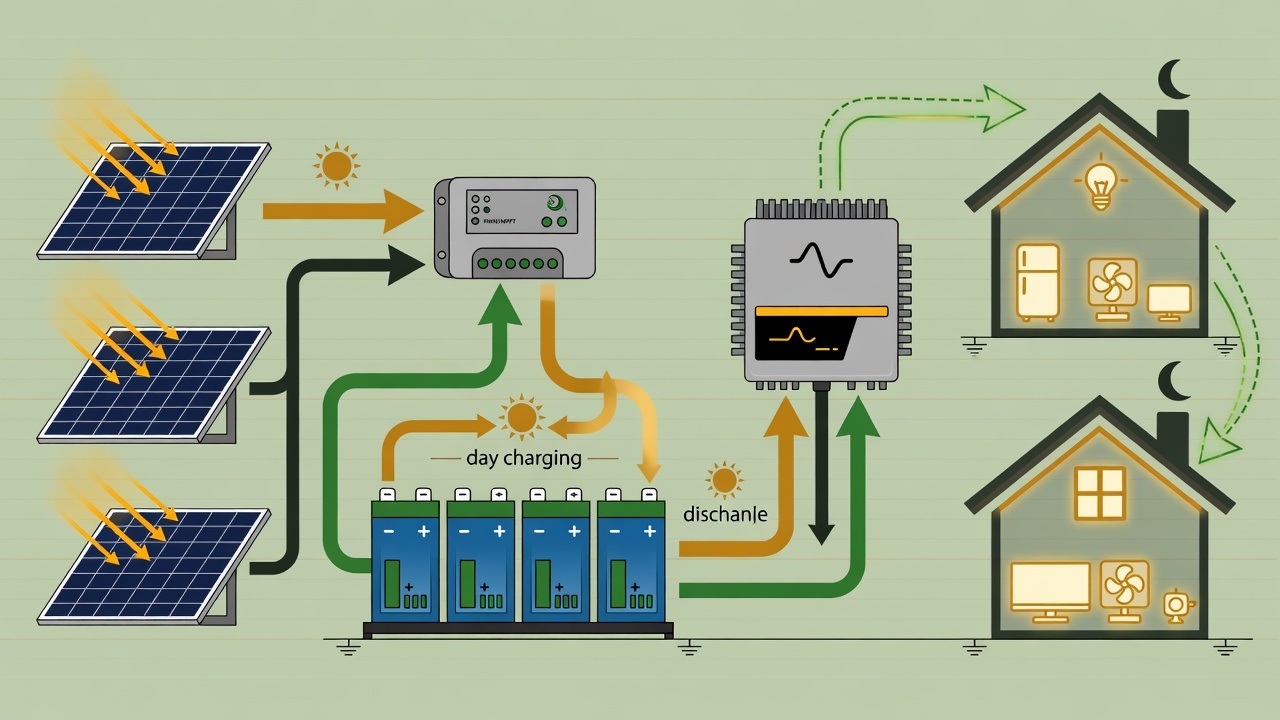
An off-grid system needs a battery because the sun doesn't shine all the time. The panels charge the battery during the day; the battery powers the loads at night and on cloudy days.
   PV Panels (DC)
        |
        v
   Charge Controller (MPPT)
        |
        +--------> DC Battery Bank
        v              |
     Inverter          |
        |              |
        v              v
   AC Loads       DC Loads
The charge controller sits between the panels and the battery, protecting the battery from overcharging and over-discharging.
Why a Battery Is Essential
In an off-grid system the battery is not optional — it is the storage backbone. Without it:
- You'd have power only while the sun shines
- The moment clouds pass or night falls, everything stops
Key Sizing Considerations
Off-grid sizing is more demanding than on-grid because there is no grid to fall back on.
- Daily energy need — total kWh your loads consume per day
- Autonomy — how many cloudy days you want to survive without sun
- Battery capacity — sized for your daily use × autonomy days, factoring in depth of discharge
- Array size — sized to both power daily loads AND recharge the battery (often with a margin for bad weather)
Battery kWh needed = Daily kWh x Autonomy days / DoD
Advantages
- Complete independence from the grid
- Works anywhere, even far from power lines
- No electricity bills, no grid outages
Disadvantages
- Energy storage is expensive — batteries add major cost
- System must be sized for worst case, often oversized for average days
- More complex — charge controllers, deeper battery management, maintenance
- Power is limited by battery and inverter capacity
Real-World Example
A remote cabin has a daily load of 5 kWh. The owner wants 2 days of autonomy (for cloudy stretches). With a 90% usable battery (say LFP), they need about:
5 kWh x 2 days / 0.90 = ~11 kWh of usable storage
That's a substantial battery bank — which is exactly why off-grid is more expensive per kWh than grid-tied.
Summary
- Off-grid systems are fully independent of the grid
- A battery is essential — it stores energy for nights and bad weather
- Sizing must account for daily use, autonomy days, and depth of discharge
- Pros: total independence; Cons: cost, complexity, and limited capacity
Next Lesson
Can you get both grid connection AND independence? That's the hybrid system — up next.
Quiz - Quiz - Off-Grid Systems
1. An off-grid system is characterized by...
2. Why does an off-grid system essentially require a battery?
3. Which is a major disadvantage of off-grid systems?